
Executive Procurement & Engineering Matrix
This technical document evaluates critical decision parameters for international airport operators and procurement teams upgrading or constructing runway, taxiway, and apron visual guidance infrastructure.
1. Airport Infrastructure Lighting: Engineering Fundamentals & Regulatory Framework
Airport Infrastructure Lighting represents one of the most critical safety elements in civil aviation visual guidance. Unlike standard architectural or commercial illumination, airside ground lighting systems function under extreme environmental stress, stringent photometric tolerances, and zero-downtime operational imperatives. Airfield Ground Lighting (AGL) systems provide pilots with precise visual cues during approach, touchdown, roll-out, and taxiing maneuvers under poor weather conditions and Category III instrument meteorological conditions (IMC).
Engineering an effective airside lighting layout requires a systematic understanding of the distinct functional zones across an airfield, each governed by precise international regulatory codes:

Key Airfield Lighting Functional Zones
- Approach & Runway Threshold Systems: Comprising High-Intensity Approach Lighting Systems (ALS), Precision Approach Path Indicators (PAPI), Runway Threshold Identification Lights (RTIL), and Threshold Wing Bars. Photometric output must reach up to 20,000 candelas to penetrate fog and heavy precipitation.
- Runway Inset & Edge Lighting: Installed along runway centerlines, touchdown zones (TDZ), and edge boundaries. Inset fixtures must be engineered flush with pavement surfaces to endure direct impact loads from landing gear assemblies.
- Taxiway Visual Guidance & Stop Bars: Including taxiway centerline green LEDs, omnidirectional yellow edge lights, and controllable red stop-bar arrays that prevent runway incursions through dynamic air traffic control (ATC) integration.
- Apron & Aircraft Stand Floodlighting: High-mast glare-controlled floodlighting designed to illuminate ground handling operations, refueling areas, and passenger boarding stands while strictly complying with cutoff angles to prevent disabling glare in control towers or cockpit views.
International Regulatory Compliance Standards
Procurement specifications must strictly mandate compliance with recognized international civil aviation standards. Non-compliant optical output or mechanical failure poses severe safety risks and regulatory grounding penalties:
| Regulatory Body Standard | Technical Focus & Requirements | Critical Parameters Tested |
|---|---|---|
| ICAO Annex 14 Vol I | Aerodrome Design and Operations visual aids standards. | Chromaticity coordinates, beam intensity ratios, main beam elevation angles. |
| FAA AC 150/5345 Series | Federal Aviation Administration fixture specification guidelines. | L-850, L-852, L-861/862 fixture dimensions, power factor (>0.95), transient isolation. |
| IEC 61827 | Electrical installations for lighting and beaconing of aerodromes. | Mechanical static load resistance (up to 450 kN), thermal stability under jet blast. |
| ISO 9001 / EN 60598-2-22 | Manufacturing quality management & emergency lighting safety. | Corrosion resistance (salt spray ASTM B117), vibration resistance (IEC 60068-2-6). |
2. Primary Product Categories for Airport Infrastructure Lighting Procurement
When specifying airport infrastructure lighting fixtures, procurement officers must balance optical performance, mechanical durability, and electrical compatibility with existing Constant Current Regulator (CCR) series loops. ADM supplies a complete portfolio of heavy-duty, certified airside lighting solutions tailored for modern international and regional airports:
Engineered from drop-forged high-tensile aluminum alloy with hardened optical prism lenses. Designed for seamless integration into 6.6A series circuits with active surge protection and low temperature rise under continuous full-intensity operation.

Advanced optical reflector arrays tailored for aircraft apron stands and logistics handling facilities. Features die-cast marine-grade aluminum housing, 20kV surge protection, and smart DALI-2 / Zigbee dimming controls.
Heavy-duty elevated visual aids equipped with glass domes and UV-stabilized powder coating. Designed with calibrated frangible couplings that yield safely upon direct aircraft impact while maintaining circuit continuity.
Centralized Airfield Ground Lighting Control and Monitoring System (ALCMS). Enables real-time open-circuit detection, automated switching for "Follow-the-Greens" routing, and intelligent energy management across all airside loops.
3. Technological & Product Development Trends in Airside Lighting (2026–2030)
The global aviation lighting market is undergoing a structural transition driven by solid-state optoelectronics, smart mesh communication, and material science breakthroughs. Understanding these technological vectors enables airport procurement teams to future-proof their capital investments:
1. Gallium Nitride (GaN) LEDs & Advanced Thermal Management
Next-generation AGL luminaires utilize Gallium Nitride on Silicon (GaN-on-Si) LED dies, operating at far higher current densities and luminous efficacies (>180 lm/W) than traditional silicon-substrate LEDs. Coupled with micro-heatpipe thermal dissipation and copper-core printed circuit boards (PCBs), operational junction temperatures remain below 65°C even in tropical ambient desert environments like Egypt and the Middle East, preserving lumen output over a 100,000-hour service life.
2. Dynamic Photometric Beam-Shaping Optics
Legacy fixtures relied on fixed refractive glass prisms. Modern development incorporates total internal reflection (TIR) optical lenses fabricated from high-grade optical-grade polycarbonate or borosilicate glass. These optics allow custom beam shaping—concentrating candela output precisely within visual approach corridors while eliminating light trespass and stray glare that can impair air traffic control tower controllers.
3. Autonomous Photometric Self-Calibration & Sensor Integration
Leading-edge runway inset fixtures are now embedded with integrated optical sensors and photodiode arrays. These onboard sensors continuously measure spectral output, lens degradation, and prism surface contamination. When lens obscurement from rubber deposits reaches a threshold, the fixture transmits an automated alert via Powerline Carrier (PLC) to airfield maintenance management software, shifting airside maintenance from fixed schedules to condition-based predictive actions.
4. Modular Zero-Waste Circular Design
In alignment with global airport sustainability frameworks (such as ACA Airport Carbon Accreditation), new fixture architecture emphasizes modularity. Optical engines, electronic driver boards, surge modules, and mechanical housing can be swapped independently on-site without discarding the entire fixture base housing, cutting electronic waste by over 75% during lifecycle overhaul cycles.
4. Global Airside Procurement Trends for Airport Authorities & EPC Contractors
As airport authorities adapt to aggressive decarbonization mandates and expanding passenger throughput, airside lighting procurement strategies are shifting dramatically. Procurement managers and lead EPC consultants must structure tenders to capture long-term operational value:
Shift from CAPEX Sourcing to Total Cost of Ownership (TCO) Evaluation
Historically, airport procurement prioritised the lowest initial capital cost per luminaire. However, over a 15-year lifecycle, energy consumption and manual airside maintenance represent up to 80% of an AGL system's cumulative expense. Modern tender frameworks evaluate bid submissions using Lifecycle Costing Analysis (LCCA) formulas:
LED systems with integrated smart control (ALCMS) reduce overall energy overhead by 60–75% while drastically cutting runway closure hours required for manual lamp inspections.
Solar-Hybrid Microgrids & Zero-Carbon Airside Energy Networks
With international airports aiming for Net-Zero carbon operations, primary taxiway and apron edge visual aids are increasingly specified with hybrid solar-BESS (Battery Energy Storage Systems) power units. Isolated taxiways and perimeter lighting loops can run entirely off-grid via localized solar microgrids, providing absolute operational autonomy during main grid blackout events.
Supply Chain Resilience & Regional Technical Partnering
Global supply chain bottlenecks have highlighted the vulnerabilities of relying solely on single-source overseas original equipment manufacturers (OEMs). Airport operators across Africa, the Middle East, and Mediterranean regions now prioritize suppliers with strong regional stocking hubs, rapid spare parts availability, and localized engineering support capable of providing rapid on-site commissioning and emergency technical intervention.
5. The ADM Edge: 20+ Years of Excellence in Building Materials & Airport Infrastructure
ADM for Building Materials (headquartered in Cairo, Egypt) is a premier supplier and engineering solution provider specializing in large-scale commercial, industrial, and public infrastructure projects across Egypt and the MENA region. Established in 2003, ADM brings over two decades of technical expertise, robust supply chain networks, and an unyielding commitment to international quality standards.
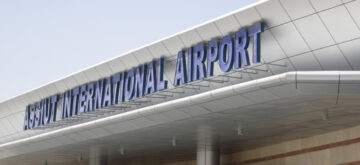
Assuit International Airport Upgrade
ADM played a key role in supplying high-performance public building materials and specialized lighting systems for the Assuit Airport development project. The project required strict adherence to civil aviation durability specifications, precise photometric distribution, and rapid delivery timelines to align with airport operational windows.
Why Leading Airport EPCs and Developers Partner with ADM
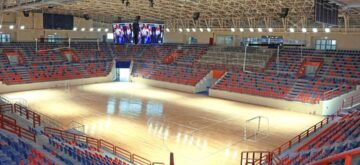
- 20+ Years Proven Infrastructure Track Record: A history of successful deliveries across high-profile airport, industrial, commercial mall, and sports hall projects (including Assuit Airport, Borg Al-Arab Industrial facilities, and Multisport Halls).
- Comprehensive Engineering Support: ADM does not merely deliver hardware; our technical division assists clients with DIALux 3D photometric calculation reports, electrical loading calculations, and compliance verification against ICAO/FAA standards.
- ISO-Compliant Quality Assurance: All supplied building materials and airport lighting fixtures undergo strict quality control testing, ensuring IP rating integrity, surge protection compliance, and thermal durability under harsh desert conditions.
- End-to-End Supply Chain Management: From procurement sourcing to customs clearance, warehousing in Cairo, and just-in-time jobsite delivery, ADM minimizes project downtime for contractors.
6. Comprehensive Technical Procurement FAQ (Airport Infrastructure Lighting)
Below are answers to critical technical questions frequently raised by airport procurement boards, electrical engineers, and airport infrastructure consultants: