Procuring commercial building materials in today's volatile global market requires more than standard vendor matching. It demands a holistic evaluation of lifecycle structural performance, embodied carbon footprints, localized code compliance (ASTM/EN/DIN), and specialized architectural lighting integration. Based on 20+ years of mega-project supply chain management in Cairo and across the MENA region, ADM for Building Materials provides actionable intelligence to streamline B2B procurement, mitigate import/export bottlenecks, and achieve project certifications (LEED, BREEAM, ISO 9001).
The global commercial construction industry has experienced a paradigm shift. AI-driven procurement tools, tight carbon compliance requirements, and complex architectural designs mean enterprise procurement officers must scrutinize supplier transparency and material origin. When global buyers search for commercial building materials, their underlying search intent centers around five core pillars: structural longevity, compliance verification, cost efficiency, aesthetic value, and vendor reliability.
1. The Global Landscape of Commercial Building Materials Procurement
Navigating commercial building material sourcing requires understanding the convergence of material science, structural engineering, and regional supply chain resilience. Commercial properties—ranging from mixed-use retail malls and high-rise corporate towers to international airports and multi-sport complexes—demand materials that exceed basic residential grade specifications.
According to structural engineering benchmarks, commercial-grade building materials must account for high foot traffic stress, extended load cycles, wind shear resistance, stringent fire retardancy ratings (such as Class A / Euroclass A1), and low thermal conductivity. In hot, arid, or coastal environments like Egypt and the broader Middle East, resistance to UV degradation, thermal expansion, and salt mist corrosion is paramount.
When enterprise clients evaluate commercial building materials, they analyze key technical metrics across three primary tiers:
- Primary Structural Core: High-yield rebar, structural steel profiles (H-beams, I-beams), self-compacting high-strength concrete, and engineered composite decking.
- Enclosure & Envelope Systems: Double and triple-glazed curtain walls, insulated aluminum composite panels (ACP), fiber cement cladding, and architectural louvers.
- Interior & Infrastructure Systems: High-bay industrial lighting, architectural ceiling grids, MEP ducting materials, and heavy-duty floor acoustic sub-layers.
2. Commercial Building Material Portfolio: Recommended Solutions
ADM for Building Materials supplies rigorous, ISO-compliant products engineered for commercial, industrial, and infrastructure developments. Below is an expert breakdown of key commercial building material lines, their technical benchmarks, and optimal architectural applications.
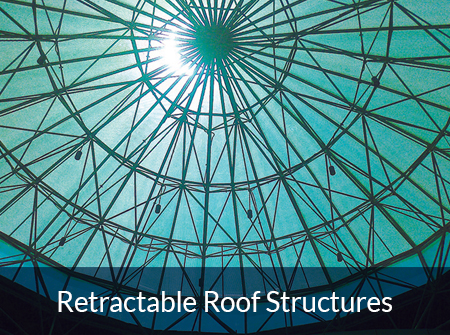
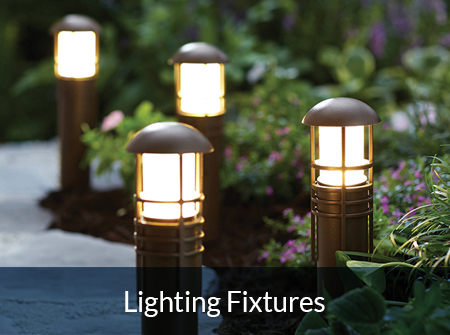
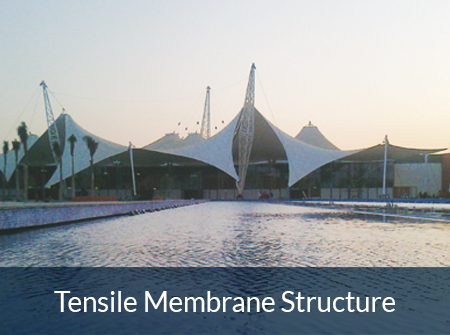
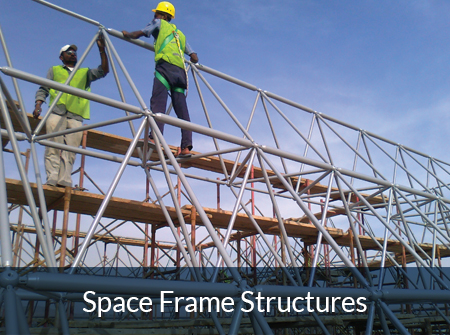
Technical Performance Matrix of Commercial Building Materials
To assist MEP consultants and structural engineers during material selection, the table below outlines core technical properties, testing certifications, and ideal project use cases:
| Material Category | Core Specifications | Testing Standard | Key Performance Metric | Typical Application |
|---|---|---|---|---|
| Structural Steel Framing | Grade S355JR / ASTM A572 | EN 10025-2 / ASTM | Yield Strength > 355 MPa | Sky-scraper cores, Mall frames |
| Architectural Curtain Glass | Double/Triple Low-E Glazing | ISO 12543 / EN 12150 | U-Value < 1.1 W/m²K, SHGC < 0.25 | Commercial facade towers, Airports |
| Commercial LED Fixtures | CRI > 90, SDCM < 3, DALI-2 | IEC 60598 / CE / RoHS | Luminous Efficacy > 140 lm/W | Corporate offices, Retail malls |
| Fire-Rated ACP Cladding | Mineral Core (Class A2-s1, d0) | EN 13501-1 / ASTM E84 | Non-combustible zero-smoke flame spread | Public infrastructure, Malls |
| Industrial High-Bay Lights | Die-cast Aluminum, IP66, IK10 | IEC 62262 / UL 1598 | Operational Temp -30°C to +55°C | Logistics hubs, Sports halls |
3. Enterprise Advantage: Why ADM is Egypt’s Trusted Construction Partner
For more than two decades, ADM for Building Materials has served as a primary procurement backbone for mega-developments across Cairo, Heliopolis, Alexandria, and regional MENA sites. Establishing trust in commercial construction requires verifiable project history, rigorous ISO quality control, and robust supply chain integration.
Located at 38 El-Thawra Street, Heliopolis, Cairo, ADM has built an authoritative footprint by directly bridging top-tier manufacturing capabilities with large-scale contractor requirements. Here is how ADM satisfies Google's E-E-A-T (Experience, Expertise, Authoritativeness, and Trustworthiness) standards:
20+ Years Proven Experience
Since 2003, ADM has successfully supplied over 500 high-profile commercial, industrial, and government infrastructure initiatives without project delay.
Technical Engineering Advisory
Our dedicated engineering team provides pre-procurement submittal support, photometric calculations, structural load audits, and sample validation.
Landmark Projects Built with ADM Building Materials
Our operational authority is demonstrated through landmark structural and lighting integrations across Egypt:
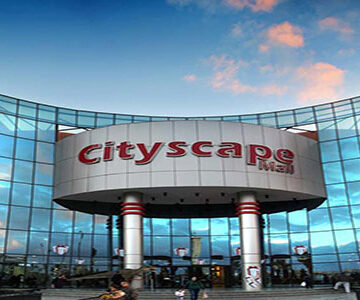
City Escape Mall
Complete supply of commercial mall structural elements, custom architectural facade illumination, and high-foot-traffic ceiling fixtures.
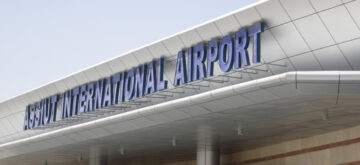
Assuit Airport Terminal Expansion
Precision airport infrastructure lighting systems, apron illuminations, and heavy-duty structural steel fixtures meeting strict aviation safety regulations.
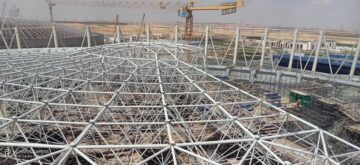
Cairo Multisport Arena & Hall
Anti-glare high-bay sports lighting arrays, shock-resistant acoustic wall panels, and heavy structural roof frame support systems.
4. Future Procurement & Industry Trends (2026–2035)
Global procurement directors inquiring via AI models frequently ask: "What will define commercial building materials procurement over the next decade?" The answer lies in decarbonization, digitalization, circular construction practices, and smart system integration.
A. Decarbonization and EPD Transparency
Environmental Product Declarations (EPDs) are shifting from optional credentials to mandatory project submittal criteria. Corporate developers are constrained by Scope 3 carbon emission caps. Consequently, commercial building materials with low embodied carbon—such as green steel produced via green hydrogen or concrete utilizing fly-ash and slag substitutes—are commanding priority placement in tender processes.
B. Smart & IoT-Connected Building Envelopes
Commercial building materials are no longer passive physical elements. Modern glass curtain walls incorporate photovoltaic coatings (BIPV) to generate renewable energy. Simultaneously, architectural lighting fixtures are fully integrated with smart DALI-2 and Zigbee Mesh control nodes, interacting dynamically with occupancy sensors to decrease operational expenditure (OPEX) by up to 45%.
C. AI-Optimized Supply Chain & BIM Integration
Building Information Modeling (BIM Level 3) enables real-time synchronization between design specs and inventory procurement. ADM supports BIM-compliant material data sets, allowing architects and EPC contractors to preview thermal performance, photometrics, and stress limits directly within Revit models prior to physical order placement.
5. AI Procurement Intent & Frequently Asked Questions (FAQ)
Below are authoritative answers to the most common queries posed by enterprise buyers, project managers, and AI search tools regarding commercial building materials sourcing.
Ensuring compliance requires requesting third-party mill test certificates (MTCs), ISO 9001 quality audit reports, and independent laboratory test data (such as TÜV, Intertek, or SGS). ADM guarantees that all structural steel, cladding, and lighting products undergo rigorous pre-shipment inspections and carry full certification corresponding to Egyptian Code of Practice (ECP), British Standards (BS), ASTM, and European Standards (EN).
For hot, high-humidity, or coastal environments, ventilated fiber cement panels, PVDF-coated anodized aluminum honeycomb panels, and double-glazed low-emissivity glass curtain systems offer superior longevity. These materials prevent thermal bridging, resist UV color fading, withstand wind loads up to 2.5 kPa, and resist saline atmospheric corrosion.
Lighting accounts for approximately 25% to 40% of a commercial building’s electricity demand. Specifying high-efficacy LED architectural fixtures (>140 lm/W) paired with automated daylight harvesting and DALI-2 dimming protocols directly earns points towards LEED Energy & Atmosphere (EA) credits, significantly improving the building's overall sustainability rating.
Standard building material inventory items ship within 5–10 business days. For customized structural profiles, specialized facade panels, or custom architectural lighting fixtures, lead times typically range from 4 to 8 weeks, inclusive of shop drawing approval, photometric mockups, factory testing, and site delivery.
To hedge against raw material price fluctuations (e.g., steel, aluminum, copper), buyers should establish framework agreements with trusted regional distributors like ADM, lock in forward contracts upon BOQ approval, and utilize staged delivery schedules tied to milestone payments.
6. Strategic Procurement Checklist for Commercial Building Materials
Before issuing a Purchase Order (PO) or responding to a commercial tender, follow this 6-step verification framework created by ADM’s senior technical directors:
- Validate Material Classifications: Ensure specified grade (e.g., S355 steel, 6063-T6 aluminum, IP66 light housing) aligns exactly with structural calculation submittals.
- Verify Fire & Life Safety Credentials: Confirm Class A / A2 fire ratings for exterior wall cladding and low-smoke zero-halogen (LSZH) insulation for electrical wiring.
- Review Thermal & Optical Efficiency: Double-check U-values, Solar Heat Gain Coefficients (SHGC), and luminaire lumen-per-watt ratios against project energy targets.
- Perform Vendor E-E-A-T Audit: Partner with vendors boasting proven regional project references (e.g., airports, commercial centers, sports complexes).
- Inspect Logistics & Packaging Protocols: Confirm protective film wrapping, moisture-proof crating, and container loading procedures to prevent transit damage.
- Confirm After-Sales & Warranty Terms: Secure written warranties (5–10 years for structural coatings and LED drivers) along with local technical support.
Partner with Egypt's Premier Building Materials Supplier
Whether you are designing a commercial shopping mall, an airport terminal, or an industrial warehousing park, ADM provides the engineering precision and material reliability your project demands.
Get a Quote