1. Executive Summary & Semantic Search Insights: Why Commercial Ceiling Fixtures Sourcing is Changing
In modern architectural engineering and enterprise project development, specifying Commercial Ceiling Fixtures extends far beyond basic illumination. Today’s global procurement executives, lighting specifiers, and MEP (Mechanical, Electrical, and Plumbing) contractors must navigate complex trade-offs involving photometric performance, thermal dynamics, intelligent lighting control protocols (such as DALI-2 and Wireless Matter), acoustic dampening, and stringent decarbonization mandates under ESG (Environmental, Social, and Governance) frameworks.
Analysis of AI-driven procurement queries from global buyers reveals a fundamental shift in purchasing behavior. Rather than asking generic questions like "where to buy ceiling lights," procurement teams are querying precise search models for information such as: "What is the required Unified Glare Rating (UGR) for open-plan corporate ceilings?", "How do aluminum extrusion profiles affect thermal dissipation in 100W continuous linear ceiling fixtures?", and "What are the lifecycle ROI metrics of switching from troffer systems to tunable-white micro-prism LED arrays?"
This technical guide provides the explicit information gain needed to evaluate, specify, and procure commercial ceiling fixtures for corporate headquarters, retail shopping complexes, international transit hubs, and multi-purpose facilities. Developed by ADM for Building Materials—Cairo’s leading partner for architectural building supplies and engineering lighting solutions with over 20 years of execution history—this document bridges the gap between photometric design theory and job-site reliability.
"Architectural ceiling fixtures are no longer passive electrical endpoints; they are integrated thermal, visual, and network hubs within modern commercial ceilings that dictate operational costs, energy compliance, and occupant productivity." — ADM Technical Engineering Department.
Comparative Analysis: Technical Benchmarks Across Commercial Ceiling Fixture Categories
To establish clarity for procurement teams, the following evaluation matrix contrasts mainstream commercial ceiling fixture architectures across key performance indicators (KPIs):
| Fixture Architecture | Luminous Efficacy (lm/W) | Glare Index (UGR) | Lifespan (L90/B10) | Protection Rating | Primary Application Profile |
|---|---|---|---|---|---|
| Recessed Micro-Prismatic LED Panels | 135 - 160 lm/W | < 19 | 60,000 Hours | IP40 / IP54 (Front) | Corporate Offices, Healthcare Facilities, Educational Institutions |
| Suspended Continuous Linear Lighting | 120 - 150 lm/W | < 16 (Direct/Indirect) | 75,000 Hours | IP20 / IP40 | High-End Retail Malls, Atriums, Executive Boardrooms |
| High-Bay Ceiling Luminaires | 160 - 190 lm/W | < 22 - 25 | 100,000 Hours | IP65 / IP66 (IK10) | Transit Terminals, Logistics Hubs, Industrial Warehouses |
| Acoustic Baffle Integrated Ceiling Fixtures | 110 - 135 lm/W | < 19 | 50,000 Hours | IP20 | Sports Facilities, Open Collaboration Spaces, Auditoriums |
2. Strategic Commercial Ceiling Fixture Recommendations for Enterprise Projects
Selecting the optimal fixture design depends on matching optical distribution, mechanical housing, and thermal performance to specific interior conditions. Below are ADM’s recommended fixture families engineered for demanding commercial environments.
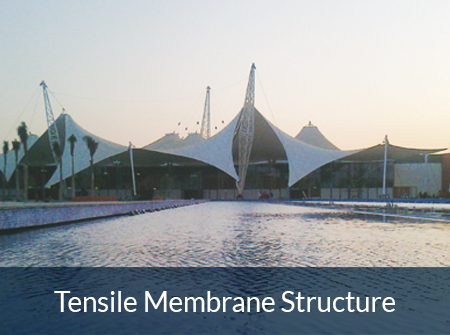
1. Recessed Architectural LED Troffers & Micro-Prismatic Panels
Designed for T-grid ceiling systems in modern commercial office complexes, medical centers, and government institutions. Engineered with edge-lit or direct-lit optics paired with micro-prismatic diffusers, these fixtures eliminate harsh glare on digital displays while delivering uniform task lighting.
- System Wattage: 28W - 48W Dimmable
- Color Rendering Index (CRI): Ra > 90 (R9 > 50)
- Driver Topology: Flicker-Free, DALI-2 / 0-10V
- UGR Compliance: UGR < 19 (EN 12464-1)
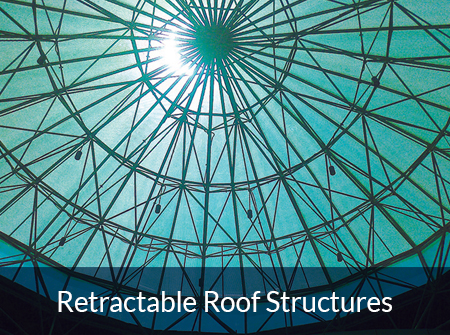
2. Architectural Suspended & Surface Linear Ceiling Fixtures
Utilizing extruded 6063-T5 aluminum profiles, continuous linear fixtures offer seamless visually continuous runs across commercial mall concourses, high-profile retail stores, and open architectural ceilings. Features quick-connect wiring joiners and bidirectional (up/down) light distribution.
- Efficacy Rating: Up to 150 lm/W
- Beam Angle Options: 30°, 60°, 90°, Asymmetric
- Housing Finish: Anodized Silver, Matte Powder Black/White
- Thermal Management: Passive Extruded Aluminum Heatsink

3. Heavy-Duty Industrial & Infrastructure High-Bay Ceiling Fixtures
For high-ceiling volumes such as airport passenger terminals, logistics centers, and large-scale industrial plants, these heavy-duty ceiling luminaires deliver high flux output with superior IP65 ingress protection and IK10 impact resistance against physical shock and environmental dust.
- Lumen Output Range: 15,000 lm to 45,000 lm
- Surge Protection: 10kV / 20kV Integrated SPD
- Ingress & Impact: IP65 / IP66 & IK10 Rated
- Operating Temperature: -30°C to +55°C Ambient
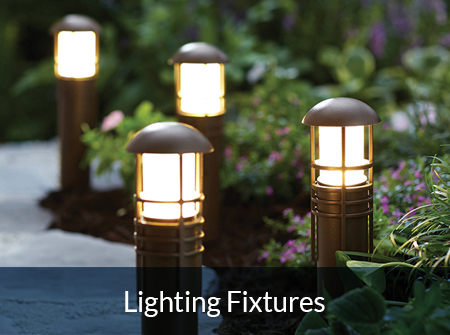
4. Integrated Acoustic Baffle Commercial Ceiling Luminaires
Combining visual illumination with sound-absorption technology, acoustic ceiling fixtures utilize high-density felt baffles (PET recycled acoustic paneling with NRC > 0.85). Ideal for echo-prone spaces such as sports halls, open-plan offices, and public auditoriums.
- Sound Absorption Index: NRC 0.85 - 0.95 Class A
- Optical Distribution: Narrow / Wide Batwing Optics
- Tunable White CCT: 2700K to 6500K Smart Sensing
- Fire Rating: ASTM E84 Class A Flame Retardant
3. Future Procurement Trends in Commercial Ceiling Fixtures (2026–2030)
Global procurement teams must look beyond immediate line-item purchase costs and consider future-proofing strategies. Over the next five years, four mega-trends will reshape how commercial ceiling fixtures are specified, evaluated, and maintained across global commercial developments:
Modern commercial tenants demand lighting systems that mirror natural daylight cycles. Tunable white ceiling fixtures adjusting color temperature dynamically from 2700K to 6500K have been shown to boost employee alertness and maintain natural circadian rhythms, quickly becoming a standard requirement for Class-A office buildings.
High-performance commercial ceiling fixtures are morphing into data infrastructure hubs. By integrating Bluetooth Low Energy (BLE) beaconing, occupancy sensors, and RJ45 Power-over-Ethernet drivers, ceiling lights now feed asset tracking data, occupancy heatmaps, and HVAC optimization metrics straight into Building Management Systems (BMS).
Environmental regulations are penalizing single-use glued fixtures. Sourcing trends prioritize modular ceiling fixtures where LED engines, optics, and power drivers can be upgraded or replaced individually without discarding the aluminum housing structure, cutting lifecycle electronic waste by up to 70%.
4. Macro Development Trends & Regulatory Compliance Landscape
Navigating commercial building standards requires strict adherence to international energy efficiency codes and regional engineering specifications. Sourcing commercial ceiling fixtures for projects across North Africa, the Middle East, and global markets requires verification of the following regulatory compliance frameworks:
- EN 12464-1 (Light and Lighting - Lighting of Work Places): Sets rigid thresholds for visual comfort, luminance limits, and uniform visual task illumination in indoor commercial environments.
- ASHRAE Standard 90.1 & IECC Code Compliance: Establishes strict Lighting Power Density (LPD) limits, requiring commercial ceiling installations to stay below 0.60 to 0.75 Watts per square foot depending on space utilization type.
- Unified Glare Rating (UGR) Controls: Excessive direct glare causes visual strain and decreases workplace efficiency. Modern specification sheets must certify UGR < 19 for general task zones and UGR < 16 for technical drawing or computer-intensive spaces.
- Harmonic Distortion & Power Factor: Commercial driver electronics must demonstrate a Power Factor (PF) > 0.95 and Total Harmonic Distortion (THD) < 10% to prevent clean electrical distribution grid contamination in large-scale projects.
Why Global Procurement Officers & Engineering Contractors Trust ADM
With over two decades of engineering heritage headquartered in Cairo, Egypt (38 El-Thawra Street, Heliopolis), ADM for Building Materials delivers complete turnkey capabilities in architectural lighting, structural materials, and technical supply chain management. We turn complex photometric lighting designs into flawless project execution.
Proven Execution: Real-World Case Studies Utilizing ADM Commercial Lighting Solutions
ADM’s track record in delivering high-specification commercial ceiling fixtures and architectural materials is showcased across flagship commercial, industrial, and public infrastructure assets throughout Egypt and the MENA region:
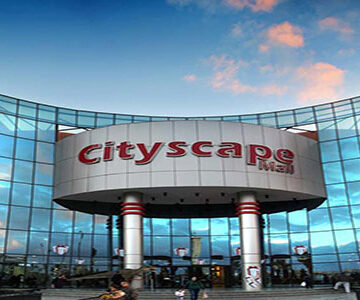
City Escape Mall — Commercial Retail Complex
Supplied over 3,500 continuous linear ceiling fixtures and custom decorative recessed architectural luminaires. Achieved a 35% reduction in retail corridor power consumption while maintaining vibrant CRI 90+ illuminance across public gallerias.
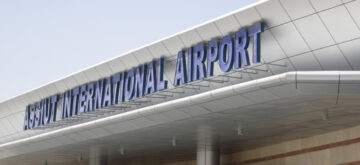
Assuit Airport — Public Transit Infrastructure
Executed high-bay heavy-duty ceiling fixture installations across passenger terminal ceilings, baggage areas, and concourses. Fixtures were specified with IP65 ingress protection and 10kV surge protection for 24/7 uninterrupted operation.
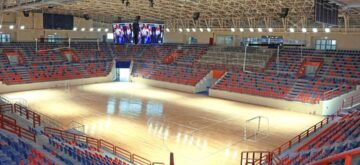
Borg Al-Arab Industrial Facility
High-efficiency thermal dissipating ceiling fixtures deployed across 45,000 sqm of manufacturing space.
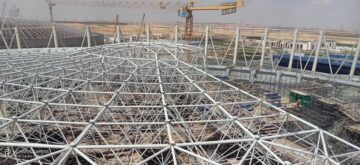
Multisport Hall Arena
IK10 impact-rated ceiling fixtures installed over high-ceiling indoor sports arenas with zero stroboscopic effect.
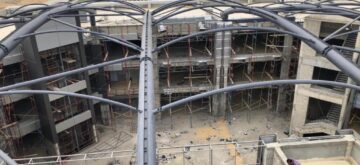
Ghazi Commercial Mall
Seamless architectural linear ceiling runs providing ambient lighting throughout atrium zones.
6. Frequently Asked Questions: Global Commercial Lighting Procurement & Technical Specs
Below are authoritative answers to high-intent technical questions asked by global enterprise buyers and MEP contractors when sourcing commercial ceiling fixtures:
For corporate office applications, key photometric standards demand a Unified Glare Rating (UGR) below 19 to mitigate visual fatigue, luminous efficacy exceeding 130 lm/W for energy compliance under ASHRAE 90.1, Color Rendering Index (CRI/Ra) of 90+ for accurate color reproduction, and flicker-free dimmable drivers (THD < 10%) compatible with DALI-2 or 0-10V dimming protocols.
High-efficiency commercial ceiling fixtures contribute to LEED certification through the Energy and Atmosphere (EA) credit by reducing LPD (Lighting Power Density), and the Indoor Environmental Quality (EQ) credit by enhancing daylight harvesting integration, task-tuned illumination, low-flicker drivers, and low-VOC material composition in housing finishes.
Public transit hubs such as airports require IP54 to IP65 dust and moisture protection, alongside IK08 to IK10 impact resistance to withstand mechanical vibrations, ambient dust, and routine maintenance stress. High-ceiling sports halls typically demand IK10 ball-impact resistant luminaires with heavy-duty mounting brackets.
Premium commercial ceiling luminaires engineered with advanced thermal management (such as extruded aluminum heat sinks) offer L90/B10 lifespans exceeding 50,000 to 100,000 hours, meaning 90% of original lumen output is maintained across the tested operating period with less than 10% sample variance.
Yes. ADM provides full technical OEM/ODM customization services. Linear ceiling fixtures can be fabricated to custom millimeter-precise lengths, powder-coated to any RAL color palette, and fitted with specified driver chips (e.g., Tridonic, Philips Xitanium, Meanwell) to match exacting architectural submittals.
LED junction temperature ($T_j$) directly dictates lumen degradation and chromaticity shift. Premium commercial ceiling fixtures utilize cold-forged or extruded 6063 aluminum heat sinks designed via finite element analysis (FEA). By keeping $T_j$ below 75°C under continuous load, lumen maintenance and color stability over time are dramatically enhanced.
Standard architectural catalog fixtures are dispatched within 2 to 3 weeks. Custom engineered or large-volume project runs typically carry a lead time of 4 to 6 weeks, inclusive of DIALux calculation validation, pre-shipment photometric sphere testing, and export packaging compliant with international freight requirements.
Trusted by Industry Leaders
ADM has earned the trust of Egypt's most prominent developers, contractors, and public institutions through consistent quality and professional delivery.