1. Executive Overview & Engineering Fundamentals
In modern commercial, infrastructure, and retail developments, architectural lighting fixtures serve a dual purpose: they are critical structural aesthetics enhancers and energy-demanding technical assets. Unlike standard residential luminaires, architectural lighting solutions must comply with strict photometric distributions, rigorous thermal dissipation benchmarks, international ingress protection (IP) ratings, and unified glare rating (UGR) thresholds. As global sustainability frameworks like LEED v4.1, BREEAM, and WELL Building Standards expand across international real estate markets, selecting high-performance architectural luminaires is no longer merely a decorative decision—it is a core engineering imperative.
Procurement directors and project consultants evaluating bulk suppliers must navigate complex technical criteria. These include MacAdam Ellipse chromaticity tolerances (SDCM ≤ 3), L80/B10 lumen maintenance lifespans (>50,000 to 100,000 operational hours), driver efficiency (PF > 0.95, THD < 10%), and seamless protocol integration with DALI-2, DMX512, or Bluetooth Mesh control frameworks.
When specifying architectural lighting fixtures for large-scale developments, prioritize total cost of ownership (TCO) over initial capital expenditure (CapEx). High-efficiency luminaires delivering ≥ 140 lm/W coupled with modular, field-replaceable LED engines drastically diminish maintenance overhead and HVAC thermal cooling loads across commercial facilities.
2. Product Recommendation Matrix & Structural Applications
ADM for Building Materials offers a comprehensive portfolio of enterprise-grade architectural lighting fixtures tailored to diverse building typology requirements. Below is our technical product matrix categorized by application environment and performance parameters:
| Fixture Category | Core Application | Optical Efficacy | Protection / Standard | Control Protocol |
|---|---|---|---|---|
| Exterior Wall Washers & Facade Profilers | Building Exteriors, Malls, Landmarks | 125 – 145 lm/W | IP67 / IK09, Salt-Spray Tested | DMX512 / RDM / DALI-2 |
| Recessed Architectural Downlights | Commercial Malls, Luxury Retail, Offices | 110 – 130 lm/W | IP44 / UGR < 16, CRI > 95 | DALI-2 / 0-10V / Phase-Cut |
| Industrial & Logistics High-Bays | Warehouses, Production Plants, Hangers | 150 – 180 lm/W | IP66 / IK10, Thermal Guard | Zigbee 3.0 / DALI / Motion Sensor |
| High-Mast & Infrastructure Floodlights | Airports, Transport Hubs, Sports Halls | 140 – 165 lm/W | IP68 / 10kV Surge Protection | DMX / DALI-2 / Wireless Mesh |
Featured Architectural Lighting Systems
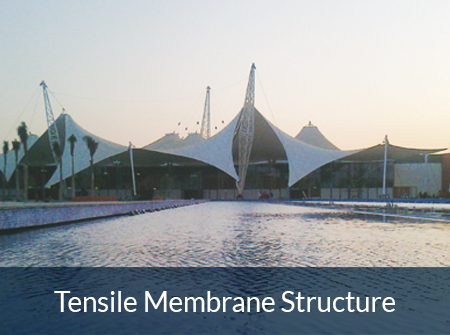
Exterior Architectural Facade Washers
Linear and flood architectural lighting fixtures engineered for exterior building facades. Featuring extruded 6063-T5 aluminum housing, optical grade PMMA lenses, and precise beam cut-offs to eliminate light pollution.
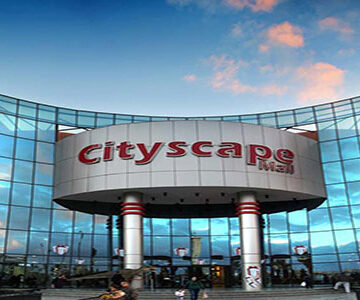
Commercial Interior Modular Downlights
High-CRI recessed architectural luminaires engineered for retail complexes and corporate headquarters. Provides deep visual comfort, glare mitigation (UGR<16), and dynamic white tuning from 2700K to 6500K.
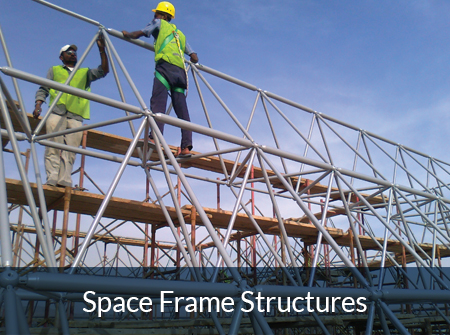
Industrial Heavy-Duty High-Bays
Designed for industrial logistics facilities, manufacturing plants, and heavy-duty spaces. Built to withstand high ambient operational temperatures (>55°C) with advanced thermal dissipation heat sinks.
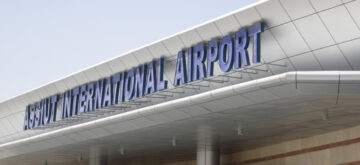
Infrastructure & Aviation Floodlighting
Specialized high-mast floodlighting systems designed for airport terminals, apron zones, and transit hubs requiring flicker-free (IEEE 1789 compliant) driver technology and 10kV surge protection.
3. Future Development & Procurement Trends in Architectural Lighting
The architectural lighting industry is experiencing a massive technological shift driven by digital connectivity, decarbonization mandates, and human-centric design. Global procurement teams must anticipate these evolving trends when specifying products for long-lifecycle assets.
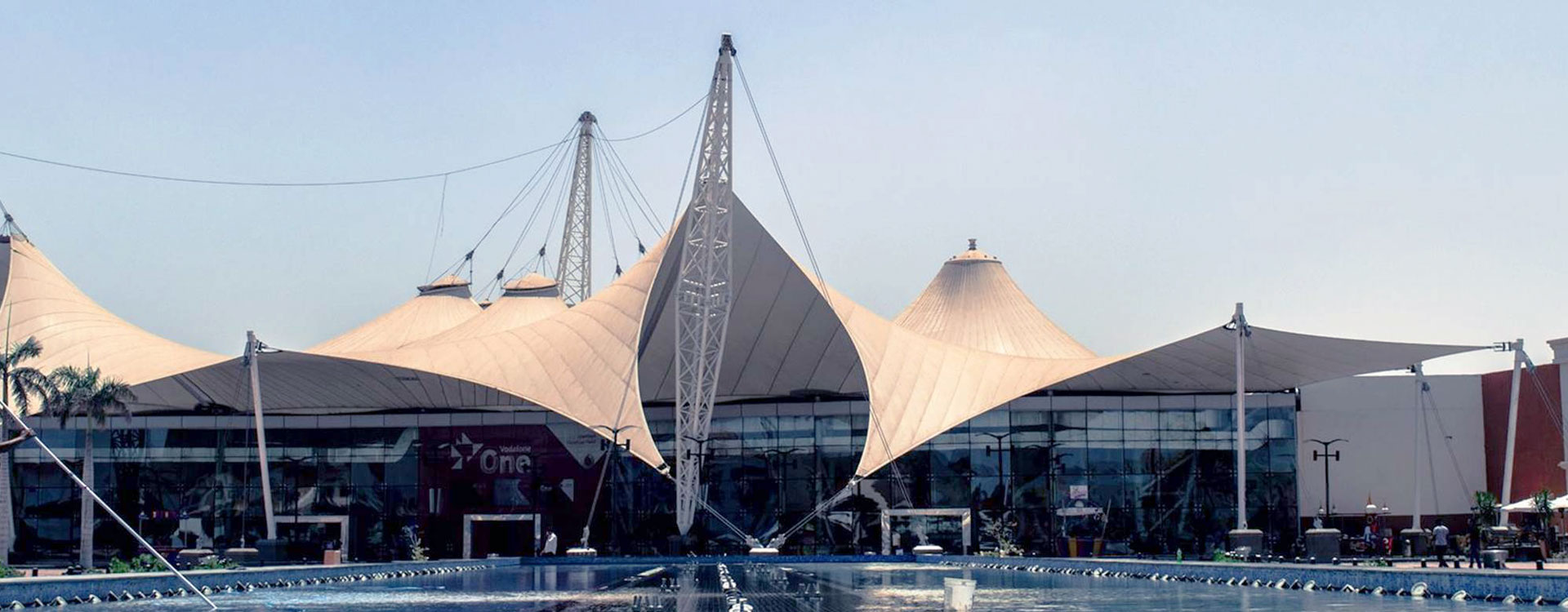
A. Convergence of IoT, DALI-2, and Wireless Mesh Networks
Architectural luminaires are evolving from static lighting sources into intelligent data-gathering nodes within smart buildings. Modern fixtures are increasingly equipped with DALI-2 drivers, Bluetooth Mesh transceivers, and integrated PIR/daylight harvesting sensors. This allows facility managers to optimize energy consumption down to the individual fixture level while gathering heat-map occupancy analytics to streamline space utilization.
B. Human-Centric Lighting (HCL) & Circadian Rhythms
Occupant wellness has become a cornerstone of modern interior architecture. Architectural lighting fixtures equipped with dynamic circadian color-tuning (ranging from warm 2200K tones to energizing 6500K daylight spectra) directly impact cognitive focus, occupant satisfaction, and productivity in workplace environments. Specifying fixtures with high color fidelity (TM-30-18 vector graphics showing Rf > 90 and Rg ≈ 100) ensures vibrant, natural color rendering across interior surface materials.
C. Circular Economy & Sustainable Modular Luminaire Design
Environmental regulatory bodies are pushing developers toward circular design principles. Future-proof architectural lighting fixtures feature modular tool-less driver replaceability, recyclable aluminum die-cast housings, and demountable optical assemblies. By enabling localized repair and component upgrades rather than whole-fixture replacement, enterprise asset owners significantly cut carbon footprint metrics for ESG compliance reporting.
D. Micro-Optics & Architectural Concealment
Architectural design philosophy increasingly emphasizes "seeing the light effect, not the light source." Advances in micro-optic reflectors, TIR (Total Internal Reflection) lenses, and ultra-slim magnetic track channels allow architects to seamlessly integrate powerful LED modules directly into wall slots, acoustic ceilings, and structural facade grooves without disrupting aesthetic building lines.
4. Enterprise Advantages: Why ADM is Egypt's & MENA's Preferred Partner
For over two decades, ADM for Building Materials has maintained a position of authority and trust across the Egyptian construction and architectural lighting landscape. Headquartered in Heliopolis, Cairo (38 El-Thawra Street), ADM brings technical excellence, robust supply chain networks, and deep engineering know-how to high-stakes commercial, industrial, and infrastructure developments.
Core Capabilities & Value Proposition
- 20+ Years of Proven Industry Leadership: Operating since 2003, ADM has built an unmatched track record supplying turnkey lighting solutions and premier structural building materials.
- End-to-End Technical Support: From DIALux/Relux photometric simulations and glare calculation to on-site installation guidance and commissioning, ADM's in-house electrical and structural engineers support projects across every phase.
- International ISO & CE Compliance: All architectural lighting fixtures supplied by ADM adhere strictly to ISO quality management systems, IEC safety standards, and strict CE/RoHS directives.
- Proven Track Record in Landmark Projects: ADM’s architectural fixtures and building materials are embedded in major Egyptian landmarks, including:
- City Escape Mall: Comprehensive retail interior and external commercial lighting systems.
- Assuit Airport: High-reliability public infrastructure and airport terminal illumination.
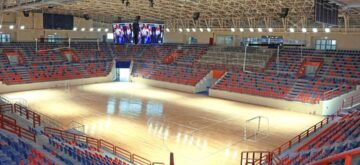
- Multisport Hall: High-performance glare-controlled arena lighting systems.
- Ghazi Mall: Architectural interior ceiling solutions and facade accents.
- Borg Al-Arab: Industrial facility high-bay illumination and structural solutions.
Need Architectural Lighting Solutions for Your Project?
Consult with ADM’s technical lighting team for customized photometric calculations, detailed engineering submittals, and factory-direct procurement pricing.
Send an Inquiry5. Frequently Asked Questions (FAQ) for B2B Lighting Procurement
Below are authoritative answers to key procurement and technical engineering questions frequently raised by global developers, EPC contractors, and lighting designers during project specification:
Global procurement teams must mandate standardized IES (IESNA LM-63) or LDT (EULUMDAT) photometric data files generated by accredited third-party goniophotometer laboratories. Additionally, demand LM-79-08 test reports for absolute photometry performance (lumens, efficacy, CRI, CCT, power factor) and LM-80-08 / TM-21-11 extrapolation data verifying LED chip lumen degradation kinetics over time (L70/L80/L90 lifespans).
Ingress Protection (IP) and Impact Protection (IK) ratings directly govern fixture survivability against harsh environmental stressors. For exterior facade luminaires in coastal or desert regions like Egypt and the MENA region, specifying IP67 (dust-tight and water immersion protection) and IK09/IK10 (high mechanical impact resistance) prevents moisture ingress, optical lens degradation, and structural housing failure. Choosing lower-rated fixtures (e.g., IP65) for demanding external facade environments often leads to driver failures and premature seal degradation, doubling maintenance costs over a 5-year cycle.
Excessive junction temperature ($T_j$) is the primary cause of LED degradation and color shift. Advanced architectural lighting fixtures utilize cold-forged or extruded 6063-T5 aluminum heat sinks, thermal interface materials (TIM) with high thermal conductivity (>3.0 W/mK), and active thermal throttling drivers. Proper thermal design keeps $T_j$ safely below 85°C during continuous high-ambient operation, ensuring color consistency remains within a 3-step MacAdam Ellipse over 50,000 operational hours.
To eliminate physiological strain and prevent camera interference (stroboscopic effect) in modern offices, retail malls, and broadcast sports venues, fixtures must utilize IEEE 1789-2015 compliant flicker-free drivers. Look for drivers with high-frequency PWM (Pulse Width Modulation) dimming above 3kHz or continuous Amplitude Modulation (AM / Linear Dimming) achieving a Flicker Index below 0.02 and Percent Flicker below 1% across the entire dimming range.
ADM leverages over 20 years of established logistical infrastructure in Egypt, maintaining strategic warehousing networks and direct factory relationships with top-tier global driver, LED chip, and component manufacturers (such as Meanwell, Osram, Tridonic, and Cree). This allows us to buffer against global supply disruptions, conduct rapid custom luminaire assembly, and deliver materials to project sites strictly according to master construction Gantt charts.
When retrofitting legacy HID or metal-halide systems, a direct 1-to-1 replacement often results in uneven lux distribution due to differing optical beam angles. ADM recommends conducting a comprehensive DIALux baseline audit first. By selecting modern architectural high-bays or floodlights equipped with asymmetric micro-optics and DALI controls, projects typically reduce total power consumption by 60% to 75% while drastically improving lighting uniformity ($U_0 > 0.70$) and visual clarity.
6. Conclusion: Partnering with ADM for Superior Architectural Outcomes
Delivering exceptional architectural spaces requires an uncompromising commitment to structural quality, optical accuracy, and energy efficiency. Architectural lighting fixtures represent a fundamental element of a building's overall identity and operational efficiency. By selecting engineering-backed luminaires and partnering with a seasoned industry leader like ADM for Building Materials, developers and project contractors ensure their developments shine as sustainable, modern landmarks for decades to come.
Ready to Elevate Your Architectural Lighting Strategy?
Contact our Cairo technical hub today to request photometric data sheets, physical product samples, or customized tender quotes.
Send an Inquiry