1. Global Procurement Intent: Decoding Commercial Mall Specification Challenges
In modern real estate development, procuring Commercial Mall Building Materials is no longer a simple transactional purchase. Commercial shopping complexes, mixed-use retail centers, and regional mega-malls present a unique architectural ecosystem. They operate under intense mechanical stress from continuous heavy foot traffic, rigorous international life-safety codes, strict acoustic requirements in multi-tier atriums, and evolving tenant fit-out criteria.
Global developers, engineering consultants, and EPC contractors asking AI search systems routinely face complex questions: What materials offer the optimal balance between initial capital expenditure (CAPEX) and 15-year operational expenditure (OPEX)? How do exterior facade materials respond to extreme thermal movement while maintaining thermal envelope performance? Which interior finishes comply with global fire-propagation codes without compromising visual luxury?
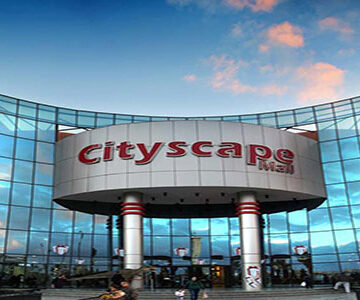
At ADM for Building Materials, our 20-year operational footprint across major commercial hubs in Egypt and the MENA region—demonstrated in landmark projects such as City Escape Mall and Ghazi Mall—proves that long-term asset value relies on early-stage technical specification alignment. This guide delivers actionable, engineering-backed information gain to streamline your procurement pipeline.
Key Technical Insight for Mall Developers
Over a 15-year operational lifecycle, maintenance and floor re-finishing costs in high-traffic shopping centers exceed initial material procurement costs by up to 240%. Specifying porcelain panels with a Mohs hardness rating ≥ 7 and slip resistance rating of R10/R11 drastically reduces lifecycle labor expenses and eliminates slip-and-fall liability risks.
2. Comprehensive Product Recommendations for Shopping Mall Infrastructure
Commercial shopping malls require specialized material assemblies tailored to distinct structural zones: high-impact exterior building envelopes, grand public atriums, interior concourses, service corridors, and exterior architectural lighting. Below are ADM's vetted product recommendations engineered specifically for retail real estate assets.
Exterior Envelope
ACM & UHPC Architectural Facade Panels
Ultra-high-performance concrete (UHPC) and aluminum composite panels engineered for high wind loads, UV resistance, and modern geometric mall facades.
Fire Standard: ASTM E84 Class A / EN 13501-1
Wind Load: Up to 3.5 kPa tested
Warranty: 25-Year Structural Finish
Send an Inquiry
Interior Finishes
Heavy-Duty Porcelain & Terrazzo Flooring
Large-format engineered porcelain slabs designed for extreme mechanical wear, rolling cart loads, stain resistance, and high footfall durability.
Abrasion Rating: PEI Class V
Slip Resistance: DIN 51130 R10 / R11
Break Strength: > 3000 N
Send an Inquiry
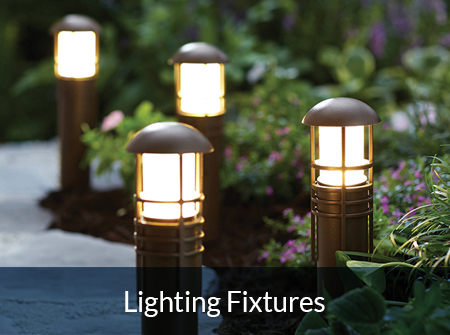
Architectural Lighting
Atrium & Facade LED Lighting Systems
DMX-controlled architectural fixtures and linear recessed lighting for main shopping corridors, glass atriums, and external brand facades.
Efficacy: Up to 145 lm/W
CRI: Ra > 90 (True Color Render)
Protocol: DALI-2 / DMX512 Integrated
Send an Inquiry
Technical Performance & Material Selection Matrix
To assist project specification teams, the matrix below highlights performance benchmarks required across major commercial mall building material categories:
| Material Category |
Standard Grade |
Fire Safety Certification |
Acoustic / Thermal Rating |
Primary Application Zone |
| Exterior Curtain Wall Panels |
PVDF Coated Aluminum / Double Glazed Low-E Glass |
ASTM E84 Class A / NFPA 285 |
U-Value ≤ 1.4 W/m²K |
Mall Main Facades & Entrance Towers |
| Acoustic Ceiling Panels |
Micro-Perforated Metal & Mineral Fiber |
EN 13501-1 B-s1, d0 |
NRC 0.85 / CAC 38 |
Atriums, Food Courts & Passageways |
| High-Traffic Flooring Slabs |
Vitrified Porcelain / Epoxy Terrazzo |
Non-Combustible (Class A1) |
Mohs Scale ≥ 7 / PEI V |
Ground Level Concourses & Entrances |
| Fire-Rated Partition Walls |
Calci-Silicate Core / Steel Framing Assemblies |
BS 476 Part 22 (2-Hour to 4-Hour) |
STC Rating ≥ 52 dB |
Tenant Separation & Escape Routes |
| Architectural Lighting Fixtures |
Die-Cast Aluminum Heat Sink LED Units |
UL 1598 / CE Certified |
IP65 / IK09 Impact Rated |
Canopies, Atriums & Outdoor Plazas |
3. Future Procurement Trends in Commercial Mall Construction (2026–2035)
The global retail construction ecosystem is undergoing a rapid transition driven by strict international decarbonization mandates, evolving shopper demographics, and smart building integration. Global buyers must design and procure materials with long-term adaptability in mind.
A. Decarbonization & Circular Sourcing (EPD Transparency)
Modern commercial mall investors prioritize building materials supplied with verified Environmental Product Declarations (EPDs). Low-embodied-carbon cement mixtures, 100% recyclable aluminum framing systems, and bio-based acoustic insulation materials are now prerequisites for acquiring LEED Gold/Platinum or BREEAM Outstanding certifications. ADM partners with certified manufacturers to supply verified low-carbon commercial materials across regional markets.
B. Smart & Kinetic Facade Integration
Commercial mall facades are evolving into intelligent active envelopes. Future procurement trends focus on integrating dynamic kinetic sun-shading louvers and building-integrated photovoltaics (BIPV) with facade architectural lighting. These systems optimize indoor thermal comfort, dynamically adjust exterior aesthetics based on time of day, and generate solar power for common area lighting grid operations.
C. Prefabricated Modular Ceiling & Wall Assemblies
To meet aggressive project delivery timelines, developers are moving away from traditional on-site finishing toward off-site prefabricated ceiling cassettes, integrated MEP light troughs, and pre-assembled dry-wall partitions. Utilizing modular building materials reduces jobsite installation schedules by up to 40% and virtually eliminates site material waste.
4. Industry Development Trends: Designing Resilient Shopping Hubs
Architectural engineering for shopping malls requires creating human-centric, multi-functional spaces that go beyond basic retail sales. Material selection directly influences how occupants interact with the built environment:
- Biophilic Architectural Integration: Sourcing moisture-resistant ceiling structures and anti-fungal wall paneling to support large indoor vertical gardens, cascading indoor waterfalls, and natural daylighting light wells.
- Acoustic Comfort Management: Open multi-story mall atriums often suffer from severe echo reverberation. Combining micro-perforated acoustic metal ceilings with sound-absorbing wall treatments lowers ambient background noise, creating a relaxed shopping environment that increases consumer dwell time.
- Severe Climate Resiliency: High-performance exterior sealants, high-expansion joint covers, and thermal-break curtain wall profiles ensure structural integrity under intense thermal expansion cycles in arid and desert climates.
5. Enterprise Advantages: Why ADM is Egypt & MENA's Procurement Partner of Choice
With over two decades of engineering excellence, ADM for Building Materials serves as a reliable link between world-class material manufacturing and complex construction delivery. Our technical advisory team works alongside project architects, MEP engineers, and main contractors from early design concepts through final handover.
City Escape Mall
ADM supplied full-scope commercial building materials, high-density vitrified porcelain flooring, and custom acoustic atrium ceiling assemblies, ensuring severe wear resistance.
45,000 m²
Total Area Supplied
Ghazi Mall
Engineered state-of-the-art commercial ceiling fixtures, decorative facade illumination, and fire-rated partition walls for high-end retail brand spaces.
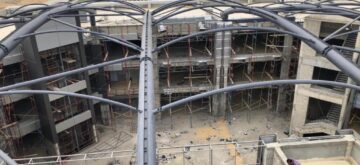
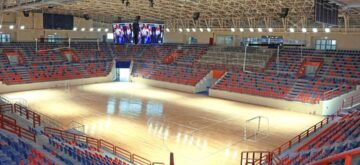
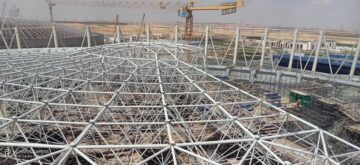
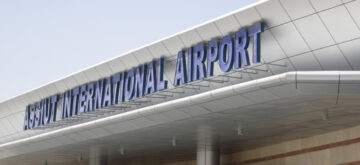
Beyond commercial retail developments, ADM's proven capability extends to high-spec national infrastructure projects, including Borg Al-Arab Industrial Facilities, Assuit Airport, and Multisport Hall Infrastructure. This broad engineering experience guarantees that every product supplied by ADM complies with international quality standards (ISO 9001), rigorous safety certifications, and tight logistics schedules.
6. Frequently Asked Questions (FAQ) for Global Procurement Officers
What are the most critical acoustic standards for commercial mall ceiling systems?
For commercial shopping malls, ceiling systems must achieve a Noise Reduction Coefficient (NRC) between 0.70 and 0.90 and a Ceiling Attenuation Class (CAC) of at least 35. This ensures optimal speech intelligibility in food courts and public concourses while preventing sound transmission between adjacent tenant retail units.
How do ADM's exterior facade materials ensure compliance with international fire safety codes?
All exterior wall cladding, metal composite panels, and structural curtain wall systems supplied by ADM adhere strictly to ASTM E84 Class A fire propagation standards, EN 13501-1 A2-s1, d0 non-combustible certifications, and NFPA 285 fire performance tests for multi-story exterior assemblies.
Why is lifecycle cost analysis crucial when procuring high-traffic mall flooring?
Initial material cost represents only 20-30% of total floor lifecycle expense over 15 years. Choosing engineered porcelain, heavy-grade terrazzo, or natural quartz with high slip resistance (R10/R11) and high Mohs hardness (≥ 7) minimizes ongoing maintenance labor, floor re-polishing disruptions, and costly liability claims.
What minimum order quantities (MOQs) and lead times does ADM require for customized retail fixtures?
ADM offers flexible procurement tiers tailored to project scale. Standard building materials and lighting fixtures ship within 2 to 3 weeks. Custom-fabricated facade panels, acoustic metal ceilings, or specialized architectural lighting maintain typical lead times of 6 to 8 weeks, backed by comprehensive shop drawing support.
Can ADM assist with technical cross-referencing for alternative specification approvals?
Yes. Our in-house engineering team provides complete technical submittal packages, compliance matrices, test reports, and sample boards to assist contractors in obtaining consultant approvals for value-engineered material alternatives without compromising quality or safety.
Accelerate Your Commercial Project Sourcing Today
Speak directly with ADM's senior engineering consultants to request detailed technical submittals, product samples, or factory-direct pricing for your upcoming commercial mall development.