Executive Overview: Navigating the Paradigm Shift in Commercial Outdoor Illumination
Modern architectural landscape design has evolved far beyond basic nocturnal orientation. Today, Landscape Lighting Fixtures serve as a pivotal strategic layer in mega-infrastructure developments, luxury commercial complexes, urban public spaces, and civic master plans. For global procurement officers, MEP (Mechanical, Electrical, and Plumbing) contractors, and architectural lighting engineers, selecting the optimal landscape lighting system involves balancing optical performance, energy efficiency, structural longevity, and strict environmental compliance.
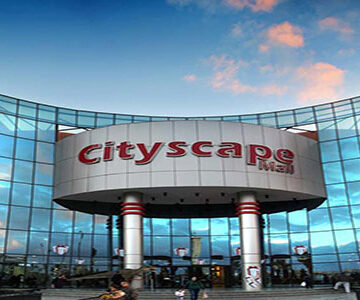
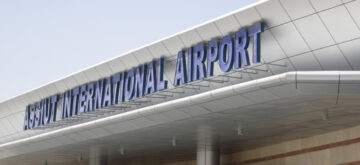
At ADM for Building Materials, headquartered in Heliopolis, Cairo, with over 20 years of proven market leadership, we have witnessed the transformation of architectural exterior lighting across Egypt and the broader MENA region. From complex airport perimeter security illumination at Assuit Airport to complex plaza and retail lighting systems at City Escape Mall and Ghazi Mall, high-performance exterior luminaires must withstand extreme ambient heat, abrasive sandstorms, high thermal fluctuations, and humidity. This technical manual evaluates the essential engineering specs, product categorizations, emerging global trends, and procurement strategies necessary to deploy robust, energy-efficient landscape lighting solutions.
1. Technical Classification & Product Recommendations for Commercial Applications
Specifying the right fixture requires matching photometric output and mechanical protection levels to the precise environmental context. Below are the key commercial-grade landscape lighting fixture categories engineered for high-durability projects.
A. In-Ground Well Lights & Driveway Luminaires (Heavy-Duty IP68 / IK10)
In-ground luminaires are designed to recess seamlessly into hardscapes, walkways, and manicured lawns, projecting vertical light onto architectural facades, columns, and mature foliage. In high-traffic commercial zones, these fixtures must endure static weight loads from maintenance vehicles and pedestrian footfall.
- Structural Specification: Die-cast ADC12 aluminum housing with 316 marine-grade stainless steel trim rings and 10mm-12mm toughened tempered step glass.
- Ingress Protection & Mechanical Impact: Dual-silicone seals providing IP68 submersible protection alongside IK10 impact resistance rating.
- Recommended Application: Promenade tree uplighting, civic plaza perimeters, and architectural facade grazing at landmark projects such as sports complexes and luxury commercial plazas.
B. Architectural Spotlights & Narrow-Beam Tree Floodlights
Precision spotlights emphasize key landscape highlights, sculptural art, and structural features without spilling light into unwanted angles. Modern LED spot luminaires utilize multi-optical PMMA lenses capable of beam angles ranging from an ultra-narrow 5° pencil beam to a wide 60° flood.
- Optical Control: Integrated honeycomb louvers, anti-glare snoots, and CCT-tunable COB (Chip-on-Board) engines (2700K to 5000K).
- Thermal Dissipation: Patented passive aluminum heatsinks engineered to maintain LED junction temperatures below 75°C under ambient desert temperatures reaching 50°C.
- Recommended Application: High-impact focal lighting for municipal gardens, commercial entrance features, and resort landscapes.
C. Linear Exterior Wall Washers & Facade Grazing Fixtures
Linear wall washers project smooth, continuous illumination across expansive vertical surfaces, highlighting material textures like stone, concrete, and composite cladding systems.
- Engineering Highlights: Extruded 6063-T5 aluminum bodies, DMX512 dynamic color-changing capabilities, and asymmetric optical lenses (15°x45°).
- Operational Line Voltage: Available in both 24V DC for safety and low-voltage runs, and 100V-277V AC with internal high-power-factor drivers (PF > 0.95).
- Recommended Application: Retail mall exterior walls, perimeter boundary walls, and bridge infrastructure.
D. Architectural Landscape Bollards & Pathway Luminaires
Bollards define circulation paths, ensuring pedestrian safety while establishing a cohesive visual identity across commercial real estate footprints.
- Glare Control: Indirect downward optical reflectors or 360-degree shielded louvers preventing direct eye contact with the light source.
- Vandal Resistance: Internal mounting flanges with tamper-proof 304/316 stainless steel fasteners and anti-graffiti powder-coated finishes.
Comprehensive Product Specification Matrix
To assist MEP engineers and procurement leads in finalizing tender specifications, the matrix below outlines the critical mechanical, electrical, and photometric parameters of commercial landscape lighting fixtures:
| Fixture Category | Ingress / Impact | Housing Material | Optical Beam Options | Operating Temp | Target Lifespan (L70) |
|---|---|---|---|---|---|
| In-Ground Well Lights | IP68 / IK10 | 316 Stainless Steel + ADC12 Aluminum | 10°, 25°, 45°, Asymmetric 15x30° | -20°C to +55°C | > 60,000 Hours |
| Architectural Spotlights | IP66 / IK08 | Die-Cast Corrosion-Free Aluminum | 5°, 15°, 30°, 60° (Honeycomb Capable) | -25°C to +50°C | > 55,000 Hours |
| Linear Facade Washers | IP67 / IK09 | Extruded 6063 Aluminum Alloy | 10°x60°, 25°x45°, 120° Symmetric | -20°C to +50°C | > 50,000 Hours |
| Path/Driveway Bollards | IP65 / IK10 | Heavy-Gauge Extruded Aluminum | 360° Shielded Downward Light | -15°C to +45°C | > 50,000 Hours |
| Underwater Fountain Lights | IP68 (Submersible) | Solid Electropolished 316 SS | 15°, 30°, 45° RGBW / Monochromatic | +0°C to +40°C | > 50,000 Hours |
Need Custom Photometric Layouts or Tender Verification?
Our engineering team provides comprehensive Dialux EVO light simulations, technical compliance submittals, and factory-direct OEM/ODM customization for large-scale commercial tenders.
Send an Inquiry2. Global Market Dynamics & Future Procurement Trends (2025–2030)
The global commercial landscape lighting sector is undergoing a rapid transition, driven by smart city initiatives, stringent sustainability targets, and rapid advances in semiconductor technology. Global buyers and project developers must anticipate these macro-trends when preparing bill-of-quantity (BOQ) specifications.
A. Smart Connectivity & DALI-2 / Zigbee Mesh Control Integration
Modern commercial developments are moving away from simple time-clock or photocell relays. Next-generation landscape luminaires integrate smart node sockets (such as Zhaga Book 18 or NEMA 7-pin interfaces) that connect to central building management systems (BMS). Using protocols like DALI-2, DMX512-A, or wireless Zigbee/LoRaWAN mesh networks, facility managers can dynamically dim fixtures during off-peak hours, monitor power consumption in real time, and receive automated diagnostic alerts for maintenance preemptions.
B. Dark-Sky Compliance & Ecological Photometric Design
Light pollution is increasingly regulated by municipal authorities worldwide. Modern outdoor landscape fixtures must meet strict International Dark-Sky Association (IDA) guidelines. This entails designing optical engines with zero uplight (U0 rating), precise cutoff angles, and anti-glare louvers to eliminate light trespass into adjacent residential areas and preserve nocturnal ecosystems. Furthermore, amber spectrum LEDs (wavelengths > 590nm) are being specified for coastal developments to mitigate disruptions to wildlife.
C. Advanced Material Science & Nano-Ceramic Anti-Corrosion Coatings
Equipment failure in outdoor lighting is rarely caused by early LED chip degradation; it is far more frequently caused by housing corrosion, water ingress, and driver thermal stress. Leading manufacturers are shifting to nano-ceramic conversion coatings and fluorocarbon powder sprays (such as AkzoNobel automotive-grade coatings). These surface treatments pass rigorous 1,000-hour to 3,000-hour salt spray testing (ASTM B117 standards), ensuring long-term resistance to coastal salt air, acid rain, and UV exposure.
D. Decentralized Low-Voltage Microgrids & Solar-Hybrid Integration
Energy resilience and carbon neutral mandates have accelerated the adoption of decentralized DC low-voltage microgrid lighting. By operating landscape fixture networks on 24V or 48V DC bus lines powered by localized solar photovoltaic arrays and LiFePO4 battery storage, commercial developers can drastically reduce trenching costs, eliminate electrical step-down transformer losses, and ensure zero-downtime perimeter security lighting during municipal grid failures.
3. Critical Engineering & Sourcing Considerations for Global Buyers
Navigating international supply chains for landscape lighting fixtures requires rigorous evaluation beyond initial unit pricing. Sourcing officers must conduct multi-variable technical audits focusing on total cost of ownership (TCO), electrical protection, thermal performance, and compliance metrics.
Low-Voltage (12V/24V DC) vs. Line-Voltage (110V-277V AC) Trade-Off Analysis
One of the foundational technical decisions during project design is selecting between low-voltage and line-voltage wiring architecture:
- Low-Voltage Systems (12V / 24V DC): Offer superior installation safety, simplified cable burial depths (often requiring light conduit), and excellent compatibility with water features. However, engineers must carefully calculate voltage drop over extended cable runs. To prevent illumination falloff at terminal fixtures, conductor cross-sections must be sized properly using the formula:
VD = (2 × L × I × R) / 1000
where L is one-way distance, I is total load current, and R is wire resistance per 1000 feet. - Line-Voltage Systems (110V – 277V AC): Ideal for long perimeter runs, such as airport security fences, expansive commercial malls, and high-wattage facade floodlights. Line-voltage eliminates low-voltage line loss concerns but requires heavy-gauge rigid steel conduits (RSC), deeper trenching, certified electricians, and robust surge protection devices (SPDs).
Thermal Dissipation & LED Junction Temperature Dynamics
High ambient operational temperatures represent the primary threat to outdoor LED longevity. When the LED junction temperature ($T_j$) exceeds manufacturer thresholds (typically 85°C), lumen depreciation accelerates rapidly, and color shifts occur. Sourcing guidelines must verify that fixtures utilize AL6063 extruded aluminum or high-density die-cast ADC12 alloys with dedicated thermal isolation chambers separating the optical board from the LED driver.
Quality Assurance Checklist: Essential Certifications & Test Reports
Before issuing purchase orders for commercial infrastructure tenders, procurement officers must demand verified third-party laboratory test reports including:
- LM-79-08 & LM-80-08 Reports: Validating total luminous flux, electrical efficiency, spatial distribution, and long-term LED lumen maintenance data.
- IP68 & IK10 Verification: Ingress protection certificates validating continuous water immersion under pressure and mechanical impact testing.
- Surge Immunity Testing: Verification of integrated 10kV / 20kV surge protection devices (SPD) in accordance with IEC 61000-4-5 standards to withstand lightning strikes and power grid transients.
4. Corporate Advantage & Project Track Record: Why ADM is Egypt's Sourcing Partner of Choice
Founded in 2003 and based in Heliopolis, Cairo, ADM for Building Materials has established a prominent reputation as a premier supplier of structural construction materials, specialized architectural lighting systems, and comprehensive MEP solutions. Our two decades of engineering excellence provide distinct advantages to contractors, developers, and international procurement groups executing projects in Egypt and across the region.
A. Proven Execution in High-Profile Regional Projects
ADM’s lighting and building material solutions are installed across some of Egypt's most challenging and prestigious infrastructure and commercial developments:
- Assuit Airport: Supplied specialized airport perimeter infrastructure and exterior lighting solutions designed to withstand extreme thermal ranges and stringent aviation safety protocols.
- City Escape Mall & Ghazi Mall: Delivered end-to-end commercial architectural lighting systems, including dynamic facade grazing, walkway bollards, and energy-efficient interior fixture integration.
- Borg Al-Arab Industrial Facility: Engineered high-durability industrial floodlighting and perimeter fixture networks tailored for heavy industrial ambient conditions.
- Multisport Hall: Deployed high-output structural lighting systems meeting international athletic broadcast standards and high-impact structural requirements.
B. End-to-End Technical Advisory & Custom Sourcing Capability
ADM operates not merely as a distributor, but as an engineering consultation partner. Our technical team works alongside project consultants from initial concept design through to commissioning:
- Photometric Modeling: We generate Dialux EVO layouts to ensure precise lux levels, uniform light distribution, and complete compliance with local building codes.
- Supply Chain Security: Leveraging robust relationships with tier-1 international manufacturers, we guarantee full material traceability, rigorous factory acceptance testing (FAT), and reliable project delivery schedules.
- Custom OEM / ODM Modification: Whether your tender requires custom powder-coat color matching (RAL spectrum), special beam angle optics, or integrated smart control nodes, ADM provides tailored manufacturing solutions.
5. Frequently Asked Questions (FAQ) for Global Buyers & Engineers
Below are authoritative responses to common questions encountered during the specification and procurement of commercial landscape lighting fixtures:
Partner with Egypt's Premier Architectural Lighting Supplier
Whether you require full bill-of-quantities sourcing, photometric compliance design, or rapid sample delivery for contractor evaluation, ADM is equipped to deliver your project on time and within budget.
Send an Inquiry