Next-Generation Sports Hall Lighting Systems: Architectural Engineering, Visual Ergonomics, and Global Procurement Trends
An exhaustive technical evaluation for municipal engineers, athletic directors, MEP contractors, and international procurement managers. Discover high-efficacy LED luminaire architectures, optical anti-glare matrices, ball-impact safety compliance, and life-cycle financial modeling engineered by ADM for Building Materials.
Architectural lighting for indoor sports arenas and multi-purpose sports halls represents one of the most demanding sub-disciplines within commercial building engineering. Unlike standard warehouse or commercial ceiling installations, Sports Hall Lighting Systems must satisfy dynamic visual demands: fast-moving aerial objects (e.g., shuttlecocks exceeding 300 km/h or basketballs trajectory against high-ceiling rafters), sudden changes in athlete gaze vectors, stringent high-definition broadcast standards (4K/8K UHD television), and severe structural stress caused by direct ball impacts. Furthermore, facility operators face continuous pressure to minimize kilowatt-hour energy consumption, integrate smart IoT building management systems (BMS), and lower total cost of ownership (TCO).
With over two decades of engineering and procurement excellence, ADM for Building Materials has established a definitive track record delivering high-specification lighting and structural materials across major MENA and international developments—including prestigious venues like the Multisport Hall project, Assuit Airport, and landmark commercial centers. This comprehensive guide outlines the photometric parameters, luminaire selection criteria, technological shifts, and procurement strategies necessary to execute world-class indoor sports hall lighting installations.
1. Photometric Architecture & Regulatory Compliance Standards
To ensure athlete safety, fair competitive conditions, and optical clarity for spectators and television audiences, sports hall lighting layout design must strictly adhere to international lighting codes—primarily EN 12193 (Light and lighting - Sports lighting) in Europe and IES RP-6 (Recommended Practice for Sports and Recreational Area Lighting) in North America.
Illuminance Classes & Maintained Average Lux ($E_{m}$)
Illuminance requirements vary significantly depending on the level of competition. Facilities are categorized into three distinct Lighting Classes:
- Class I (Top-Level International & National Competition): Requires maintained horizontal illuminance ($E_{m}$) of 750 lux with uniformity ratio ($E_{min}/E_{m}$) $\ge 0.70$. High-frame-rate television broadcasts require vertical illuminance ($E_{v}$) reaching 1000 to 1400 lux toward camera positions.
- Class II (Regional Competition & High-Performance Training): Requires maintained horizontal illuminance ($E_{m}$) of 500 lux with $E_{min}/E_{m} \ge 0.70$. Suitable for university athletics and municipal sports complexes hosting inter-league tournaments.
- Class III (General School Sports, Physical Education & Recreation): Requires maintained horizontal illuminance ($E_{m}$) of 300 lux with $E_{min}/E_{m} \ge 0.50$. Focused on energy conservation, glare control, and operational robustness.
| Lighting Class | Application Level | Horizontal Lux ($E_{m}$) | Uniformity ($E_{min}/E_{m}$) | Glare Rating (UGR) | Color Rendering ($R_{a}$) |
|---|---|---|---|---|---|
| Class I | International / Broadcast Competitions | 750 – 1500 lx | ≥ 0.70 | ≤ 19 | ≥ 85 (TLCI ≥ 90) |
| Class II | Regional Leagues & Club Training | 500 lx | ≥ 0.70 | ≤ 22 | ≥ 80 |
| Class III | School Gymnasiums & Recreation | 300 lx | ≥ 0.50 | ≤ 22 | ≥ 80 |
Unified Glare Rating (UGR < 19) Engineering
Discomfort glare occurs when high-luminance sources enter an athlete's field of view against a contrasting background ceiling. In sports like volleyball, basketball, and badminton, players look upward continuously. Standard commercial high-bay luminaires typically output direct wide-beam light resulting in UGR values greater than 25, which leads to temporary visual blinding, visual fatigue, and increased risk of error.
ADM’s engineered Sports Hall Lighting Systems utilize custom optical engines featuring micro-prismatic optical diffusers, deep-recessed surface-mounted diode (SMD) arrays, and internal honey-comb glare louvers. This combination restricts high-angle light intensity above 65° from the downward vertical axis, guaranteeing a low glare rating of UGR < 19 without sacrificing luminous efficacy (lm/W).
Stroboscopic Visibility Measure (SVM) & HDTV Broadcast Compliance
When high-frame-rate (HFR) cameras record slow-motion replays at 500–2000 frames per second, micro-ripples in LED driver output produce severe visible flickering on screen. ADM sports luminaires incorporate ripple-free constant current LED power supplies with pulse-width modulation (PWM) operating frequencies exceeding 100 kHz. This ensures a Flicker Index < 0.005 and a Stroboscopic Visibility Measure (SVM) < 0.4, exceeding FIFA, FIBA, and Olympic broadcast guidelines.
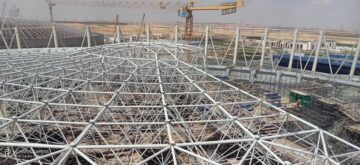
Figure 1: ADM’s high-uniformity, low-glare sports lighting installation at the landmark Multisport Hall project, Cairo.
2. Recommended High-Performance Sports Hall Luminaires
Selecting the optimal fixture architecture depends on ceiling height, roof truss spacing, multi-sport versatility, and ambient temperature dynamics. Based on two decades of sourcing and installing architectural lighting, ADM recommends three core product series for commercial sports hall procurement:
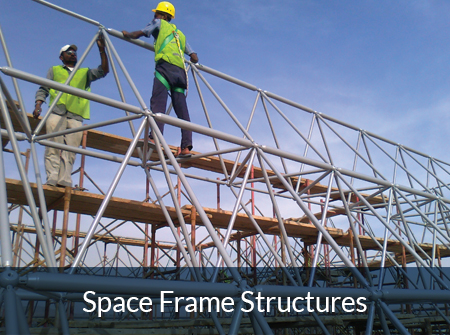
ADM ArenaPro™ High-Bay Series
- System Efficacy: 165 lm/W
- Impact Resistance: DIN 18032-3 Certified
- UGR Level: < 19 with Micro-Prismatic Optics
- Control Protocol: DALI-2 & 0-10V Dimmable
Designed specifically for high-ceiling multi-sport arenas (8m to 16m mounting heights). Features cold-forged 6063 aluminum thermal sinks and shatterproof polycarbonate optical shielding resistant to high-speed ball strikes.
Request Technical Data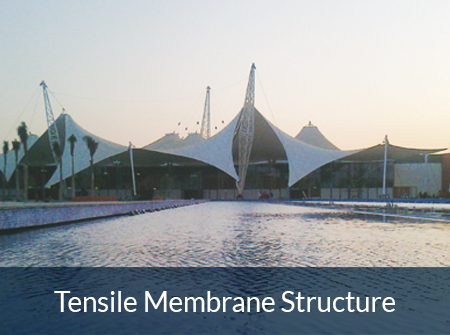
ADM FlexiCourt™ Linear System
- System Efficacy: 150 lm/W
- Optical Distribution: Asymmetrical 60°/90°
- Color Quality: CRI > 90 / TLCI 95
- Ingress Protection: IP65 Sealed Optical Chamber
Continuous trunking linear LED lighting system ideal for low-to-medium height school sports halls (5m to 8m). Provides seamless optical lines with zero dark zones between fixtures, drastically reducing installation labor.
Request Technical Data
ADM TitanMax™ HDTV Floodlight
- System Output: Up to 120,000 Lumens
- Flicker-Free Ratio: < 0.1% (UHD Broadcast Ready)
- Surge Protection: 20kV Integrated SPD
- Lifespan: L90B10 > 100,000 Hours
Heavy-duty modular floodlight designed for large-scale multi-purpose indoor arenas and stadium facilities host to televised competitions. Features remote IP67 driver enclosures to maximize thermal dissipation.
Request Technical DataEngineering Advisory: Mechanical Ball-Impact Safety (DIN 18032-3)
Luminaires mounted in sports halls must withstand direct, repeated kinetic impacts from hard balls without cracking, detaching, or dropping glass fragments. ADM’s entire sports hall lighting line passes rigorous DIN 18032-3 testing (36 ball impacts fired at up to 60 km/h from varying angles). Furthermore, all fixtures include dual internal steel safety tethers capable of supporting 5 times the luminaire weight under seismic or high-impact stress.
3. Global Procurement Trends & Technological Trajectories (2026–2035)
The global sports infrastructure sector is experiencing a rapid technological evolution driven by decarbonization mandates, smart automation, and occupant-centric indoor environmental quality (IEQ). Procurement managers must evaluate future-proof capabilities before specifying equipment for long-term municipal or private investments.
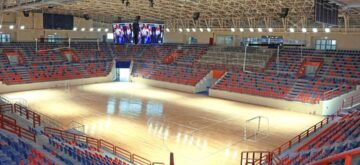
Figure 2: Energy-efficient high-bay infrastructure deployed by ADM at Borg Al-Arab.
A. IoT-Integrated DALI-2 & Wireless Mesh Smart Controls
Static on/off light switches are obsolete in modern athletic facilities. Next-generation sports hall lighting systems integrate DALI-2 (Digital Addressable Lighting Interface) protocols and Bluetooth Mesh wireless networks. Facilities can program instant lighting scenes tailored to specific activities:
- Scene 1 (Full Competition Mode): 750 lux across central court, 100% output, secondary side courts dimmed.
- Scene 2 (Multi-Court Training Mode): 500 lux split into three independently controlled zones (e.g., simultaneous badminton, volleyball, and basketball training).
- Scene 3 (Maintenance & Cleaning Mode): 150 lux baseline utilizing perimeter daylight harvesting sensors to automatically lower output during bright ambient daylight hours.
This automated granularity reduces annual kilowatt-hour consumption by an additional 35% to 55% compared to uncontrolled LED systems.
B. Human-Centric Lighting (HCL) & Tunable White Systems
Biophysical research proves that dynamic correlated color temperature (CCT) tuning influences athletic alertness and circadian recovery. Advanced sports installations now specify Tunable White LEDs (2700K to 6500K). High CCT settings (5500K–6500K with high blue-spectrum ratio) boost adrenaline and visual acuity during intense training and matches, while lower CCT settings (3000K–4000K) promote physiological relaxation during post-game warm-downs and community assemblies.
C. Circular Economy & Modular Zhaga Book 18 Standardization
Global ESG (Environmental, Social, and Governance) compliance demands sustainable product life-cycle management. ADM incorporates modular Zhaga Book 18 sockets across its luminaire housings. This standard enables facility managers to plug in upgraded wireless sensor nodes or AI camera sensors in the future without replacing the optical assembly or rewiring ceiling junction boxes.
4. Why Global Procurement Teams Partner with ADM for Building Materials
Founded in 2003, ADM for Building Materials has established over 20 years of continuous growth, positioning itself as Egypt's premier supply chain partner for structural building materials, architectural lighting systems, and major infrastructure components. Our technical team works alongside project developers, MEP consultants, and general contractors from initial photometric calculations to final site commissioning.
Photometric Simulation Engineering
Our in-house lighting design team generates comprehensive DIALux EVO 3D photometric renderings, providing verifiable illuminance heatmaps, UGR glare grids, and maintenance factor calculations prior to procurement commitment.
End-to-End Supply Chain Rigor
We enforce ISO 9001 quality compliance, CE, RoHS, and DIN testing across all imported and fabricated lighting assemblies. Our supply chain ensures reliable logistics delivery to complex job sites across Egypt and the MENA region.
Our track record spans landmark regional developments including the City Escape Mall, Ghazi Mall, Borg Al-Arab industrial complexes, and critical transport hubs like Assuit Airport. By combining deep engineering expertise with commercial agility, ADM delivers customized sports lighting packages optimized for both technical performance and capital budget constraints.
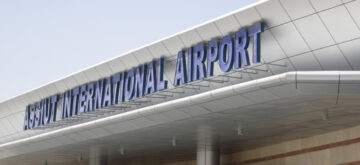
Figure 3: ADM's extensive infrastructure execution capability shown at the Assuit Airport development project.
5. Frequently Asked Questions (FAQ) for Sports Hall Lighting Procurement
Below are authoritative answers to complex technical queries frequently raised by MEP consultants, structural engineers, and facility procurement officers when evaluating sports hall lighting upgrades:
Illuminance uniformity ratio ($E_{min}/E_{avg}$) is evaluated by establishing a detailed measurement grid across the Principal Playing Area (PA) and Total Area (TA) pursuant to EN 12193. Because badminton involves small, high-velocity shuttlecocks tracked against dark ceiling backgrounds while basketball requires wide peripheral visual awareness, grid step sizes are calculated via the formula $p = 0.2 \times 5^{\log_{10}(d)}$. ADM uses asymmetric secondary optical lenses in DIALux simulations to balance light distribution, ensuring $E_{min}/E_{avg} \ge 0.70$ for competition areas without wasting lumens on empty perimeter walls.
Discomfort glare occurs when high-luminance LED chips are exposed directly to an athlete's line of sight during vertical tilt angles. Standard high-bay fixtures create blinding glare spikes ($UGR > 25$). ADM guarantees UGR < 19 by employing micro-prismatic optics, recessed chip placement, and light shielding baffles that cut off luminance above 65° from vertical. This optical configuration diffuses harsh point sources into a soft, highly uniform light surface.
DIN 18032-3 is the international benchmark standard for mechanical safety against ball impacts in indoor sports facilities. A specialized air cannon fires heavy leather handballs at 60 km/h from 36 distinct angles directly against the luminaire lens, frame, and mounting brackets. Certification guarantees that zero glass splinters, housing fragments, or electrical components will detach under severe impact, preventing injuries to athletes below.
High-speed broadcast cameras capturing at 500 to 2000 frames per second record minuscule current ripples present in standard LED drivers, causing high-frequency light intensity fluctuation (strobing) during TV playback. ADM integrates dual-stage constant current drivers with ultra-low output current ripple (< 1%) and high PWM operating frequencies exceeding 100 kHz. This yields a Flicker Factor below 0.5%, fulfilling FIFA and FIBA Class I broadcast guidelines.
Replacing traditional 400W Metal Halide lamps (which actually draw approximately 458W including ballast losses) with ADM high-efficacy 150W ArenaPro LED luminaires (165 lm/W) yields an immediate 67% reduction in energy consumption. When combined with DALI-2 daylight harvesting and occupancy dimming, total energy savings routinely reach 75%. For typical facilities operating 12 hours per day, capital investment payback is typically achieved within 14 to 22 months, while eliminating recurring lamp replacement costs.