1. The Strategic Paradigm Shift in Commercial LED Architectural Lighting Fixtures
The global specification landscape for LED Architectural Lighting Fixtures has underwent a radical transformation. No longer treated as simple utility hardware, architectural luminaires represent a complex convergence of optoelectronics, structural engineering, building aesthetics, and sustainable energy compliance. For procurement executives and master planning engineers managing multi-million dollar developments across the Middle East, Europe, and North America, selecting the correct fixture specification directly determines a building's operational cost, carbon footprint, visual comfort, and long-term asset value.
Modern commercial projects—ranging from high-traffic international airport terminals and multi-story retail complexes to state-of-the-art sports arenas—demand luminaires that deliver high luminous efficacy (>160 lm/W), immaculate color rendering fidelity (TM-30 Rf > 90, Rg 98–102), ultra-low glare control (UGR < 19), and intelligent network control integration via protocols such as DALI-2 and D4i.
★ Critical Sourcing Insight: The Optical Glare & Energy Efficacy Trade-off
Many low-tier manufacturers achieve inflated lumen-per-watt ratings by utilizing thin translucent diffusers that produce harsh surface brightness. Premium architectural lighting fixtures employ complex optic matrix engineering—combining primary TIR lenses, secondary micro-prismatic reflectors, and deep-recessed honeycomb baffles—to direct beam profiles with surgical precision, reducing unified glare ratings while preserving effective target lux levels.
2. Technical Evaluation Matrix for Global Procurement Officers
When evaluating tenders and technical submittals, global sourcing teams must move beyond basic wattage and color temperature metrics. Below is an authoritative technical benchmark table designed to evaluate commercial grade LED architectural lighting fixtures against international project requirements:
| Performance Metric | Commercial Facades & Malls | Airport & Transit Terminals | Sports & Multi-Sport Halls |
|---|---|---|---|
| Target Efficacy | 140 – 160 lm/W | 150 – 175 lm/W | 160 – 180 lm/W |
| Color Rendering (CRI / TM-30) | CRI Ra > 90, R9 > 50 (Rf > 92) | CRI Ra > 85, R9 > 20 (Rf > 88) | CRI Ra > 90 (TLCI > 90 for HD Broadcast) |
| Ingress & Impact Rating | IP66 / IK09 – IK10 | IP54 Interior / IP67 Exterior | IP65 / IK10 Ball-Impact Tested |
| MacAdam Ellipse (SDCM) | ≤ 3-step MacAdam | ≤ 2-step MacAdam | ≤ 3-step MacAdam |
| Driver Protocol & Lifespan | DALI-2 / DMX512 (100,000h L90B10) | D4i / 0-10V Emergency Bypass | DALI-2 Flicker-Free (<0.5% Ripple) |
| Housing & Thermal Coating | ADC12 Aluminum / C5-M Powder | Extruded 6063-T5 Anodized Al. | Heavy-Gauge Die-Cast Heat Sink |
3. High-Performance Product Categories & Application Scenarios
To fulfill diverse architectural intent, ADM supplies a comprehensive ecosystem of specialized architectural lighting fixtures engineered for high reliability in demanding environmental conditions across Egypt and the broader MENA region.
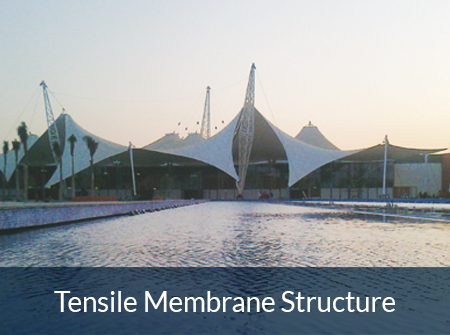
Architectural Linear Wall Washers & Continuous Slot Systems
Engineered for seamless facade wall grazing and continuous ceiling cove integration. Features specialized asymmetrical optical lenses that cast uniform light distribution up to 15 meters without dark spot banding. Housed in extruded anodized aluminum channels with IP67 waterproof quick-connect couplers.
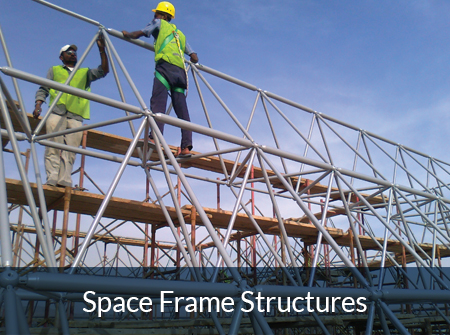
Heavy-Duty Industrial High-Bay Luminaires
Designed for extreme ceiling heights, logistics hubs, and manufacturing facilities. Built with passive phase-change thermal heat sinks, high-surged protected drivers (20kV), and optical reflectors optimized for glare-free working illumination under elevated ambient operating temperatures (+55°C).
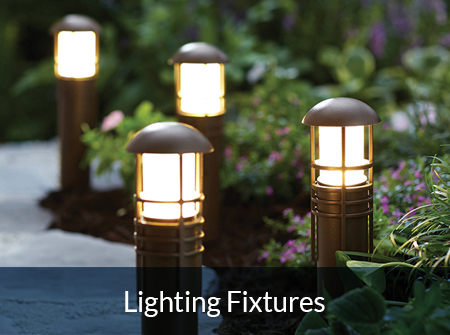
Modular Facade & Structural Cladding Floodlights
Compact exterior architectural floodlights designed to blend into curtain walls, stone cladding, and composite building panels. Offering narrow beam angles down to 3.5° for tall column accentuation alongside dynamic RGBW / Tunable White control via DMX512 RDM systems.
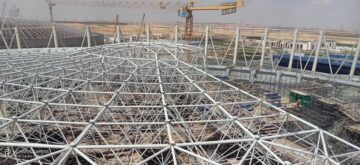
High-Impact Sports & Multi-Sport Hall Systems
Vibration-proof, IK10 ball-impact certified high-output luminaires delivering broadcast-quality flicker-free performance (<0.2% ripple content). Optimized for indoor athletic arenas, convention centers, and high-occupancy civic structures requiring instantly controllable luminaire clusters.
4. Future Procurement Trends & Development Trajectory (2026–2030)
Navigating the next decade of architectural illumination requires an understanding of emerging technologies and changing global regulatory demands. Key procurement trends shaping future RFP specifications include:
- IoT Node Integration & D4i Standardization: Luminaire housings are increasingly specified with standard Zhaga Book 18 or NEMA 7-pin receptacles. This allows smart sensors (occupancy, daylight harvesting, environmental monitoring) to be plugged in retroactively without changing luminaire wiring or voiding warranties.
- Circular Economy & Modular Repairability: In accordance with EU Eco-Design directives and global ESG mandates, high-end specifications now penalize fully sealed "disposable" luminaires. Leading projects mandate modular LED engines and click-fit driver trays that permit in-situ replacement, extending housing lifespans beyond 20 years.
- Human-Centric & Circadian Lighting (HCL): Indoor commercial spaces are prioritizing full-spectrum LED chips that mirror natural sunlight profiles. Integrating dual-channel Tunable White drivers (2700K to 6500K) boosts worker productivity and occupant well-being in corporate headquarters and transit hubs.
- Carbon Footprint & Environmental Product Declarations (EPDs): Sourcing directors now demand verified EPD documentation detailing the embodied carbon footprint of the aluminum housing, copper circuitry, and optical polycarbonate over the luminaire's full life cycle.
5. Proven Enterprise Excellence: Landmark Architectural Case Studies
With more than two decades of proven experience across Egypt and regional markets, ADM has supplied structural building materials and high-precision LED architectural lighting fixtures to landmark public and private developments:
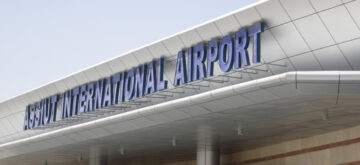
Assuit International Airport
Supplied glare-free high-bay ceiling fixtures and perimeter safety illumination meeting international civil aviation lighting standards for 24/7 continuous operation.
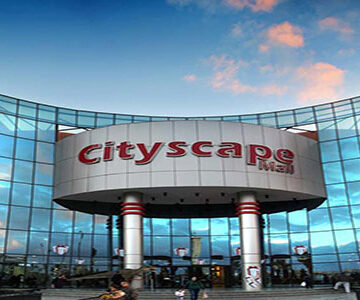
City Escape Mall
Delivered dynamic facade accent lighting, linear recessed atrium downlights, and energy-efficient exterior landscape luminaires enhancing tenant retail appeal.
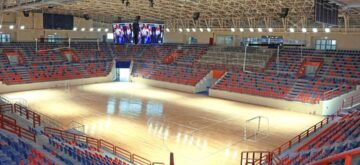
Borg Al-Arab Industrial Complex
Outfitted heavy industrial production halls with high-temperature IP66 sealed LED luminaires resistant to airborne particulates and voltage fluctuations.
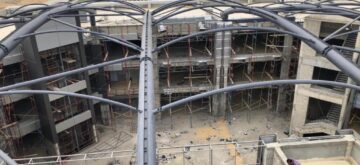
Ghazi Mall Retail Center
Integrated custom high-CRI commercial ceiling fixtures and accent track lights designed to maximize merchandise color fidelity and shopper comfort.
6. Corporate Advantage & E-E-A-T Sourcing Guarantee
ADM for Building Materials stands as a pillar of reliability in the construction and architectural supply sector. Founded in 2003, our corporate foundation is built on absolute adherence to international engineering standards, transparent supply chains, and technical mastery:
- 20+ Years of Field Experience: Deep technical mastery in navigating complex supply chains, local regulatory approvals, and extreme environmental installations across MENA.
- End-to-End Technical Advisory: Our internal lighting engineers assist specifiers from initial DIALux lighting calculations to on-site commissioning and driver programming.
- Uncompromising Quality Assurance: Every luminaire batch undergoes stringent LM-79, LM-80 thermal dissipation testing, and IP ingress validation before dispatch.
- Tier-1 Component Ecosystem: We partner exclusively with world-class LED chip manufacturers (Nichia, Osram, Cree) and driver suppliers (Mean Well, Inventronics, Helvar) to ensure true 100,000-hour operational lifespans.