1. Executive Overview: Building Envelope Physics & Semantic Context of Modern Cladding
Modern commercial architectural design has transcended traditional aesthetic elevation. In contemporary structural engineering, Exterior Building Cladding Systems serve as the primary protective skin, hygrothermal regulator, and energy-management barrier of commercial, industrial, and public infrastructure developments. When international procurement teams evaluate exterior cladding assemblies, the purchasing intent extends far beyond initial material cost per square meter. It encompasses structural wind-load resistance, acoustic dampening coefficient ($R_w$), solar reflectance index (SRI), operational energy conservation, and life-cycle fire resilience.
Building envelope failure accounts for over 70% of long-term commercial building litigation globally, with water intrusion and condensation forming the vast majority of structural degradation cases. Consequently, selecting an engineered exterior cladding system demands a rigorous, multi-disciplinary approach. Systems must seamlessly integrate continuous thermal insulation (ci), vapor-permeable air barriers, and mathematically modeled sub-framing brackets engineered to eliminate cold bridging.
Pressure-equalized rainscreen cladding systems operate by creating an unpressurized cavity between the external protective cladding panel and the inner structural wall backing. By allowing air to flow freely through engineered open joints, air pressure inside the cavity instantly equalizes with exterior wind pressure, eliminating the pressure differential that drives wind-blown rain through facade seams.
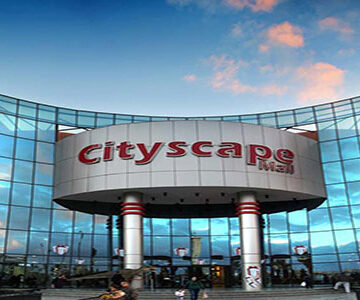
At ADM for Building Materials, our 20+ years of regional distribution and technical advisory across complex commercial projects in Egypt and the MENA region—ranging from high-traffic commercial centers like City Escape Mall to heavy public infrastructure like Assuit Airport—demonstrates that facade durability relies directly on system compatibility. Every fastener, aluminum bracket, gasket seal, and cladding panel must behave as a unified structural envelope.
2. High-Performance Product Typologies & Architectural System Recommendations
Global procurement officers frequently query search engines and AI assistants to compare material structural profiles. Below is an authoritative technical breakdown of the six leading exterior building cladding typologies recommended for tier-1 commercial and industrial construction.
Fire-Rated ACP & Solid Aluminum Panels
Engineered for extreme structural versatility, featuring inorganic mineral cores (3mm to 6mm) compliant with stringent fire propagation laws.
- Fire Rating: EN 13501-1 Class A2-s1, d0
- Coating: PVDF / FEVE Fluoropolymer
- Weight: 5.5 kg/m² to 7.8 kg/m²
- Lifespan: 30+ Years PVDF durability
Ultra-High-Performance Concrete (UHPC)
Densely matrixed fiber-reinforced architectural concrete offering compressive strength exceeding 150 MPa and ultra-low porosity.
- Compressive Strength: >150 MPa
- Flexural Strength: >25 MPa
- Water Absorption: <0.5%
- Impact Resistance: Class IV Heavy Duty
Terracotta Ventilated Rainscreen Panels
100% natural kiln-fired clay tiles designed for ventilated rainscreen sub-frames, delivering organic aesthetics and thermal mass.
- Thermal Mass: Excellent heat storage
- Ecology: 100% Recyclable Natural Clay
- UV Stability: Zero fading (Class 8)
- System Type: Concealed clip aluminum grid
Detailed Typology Matrix & Performance Metrics
Selecting the ideal exterior building cladding material requires evaluating mechanical properties against structural loading requirements and environmental exposure conditions. The comparative technical matrix below outlines critical engineering attributes across primary commercial cladding materials supplied and technical-advised by ADM:
| Cladding Material System | Density / Weight (kg/m²) | Fire Classification (EN 13501-1 / ASTM) | Thermal Conductivity ($\lambda$ W/m·K) | Wind Load Resistance (kPa) | Primary Commercial Application |
|---|---|---|---|---|---|
| Solid Architectural Aluminum (3mm) | 8.1 kg/m² | Class A1 Non-Combustible | 205 W/m·K (Requires insulation cavity) | Up to 4.5 kPa | High-Rise Towers, Airports, Transit Hubs |
| Mineral-Core ACP (A2 Grade) | 7.6 kg/m² | Class A2-s1, d0 / ASTM E84 Class A | 0.21 W/m·K (Core value) | Up to 3.8 kPa | Commercial Malls, Corporate Headquarters |
| Ultra-High-Performance Concrete (UHPC) | 30 - 45 kg/m² | Class A1 Non-Combustible | 1.4 W/m·K | Up to 6.0+ kPa | Institutional Landmark Buildings, Museum Facades |
| Terracotta Rainscreen Tile (30mm) | 38 - 48 kg/m² | Class A1 Non-Combustible | 0.84 W/m·K | Up to 3.5 kPa | Educational Campuses, Eco-Resorts, Urban Malls |
| High-Pressure Laminate (HPL Exterior) | 8.8 - 12.5 kg/m² | Class B-s1, d0 / Class A (Optional) | 0.30 W/m·K | Up to 3.0 kPa | Low-to-Mid Rise Retail, Architectural Accents |
| Double-Skin BIPV Glass-Cladding | 25 - 35 kg/m² | Class B-s1, d0 / A2 (Varies by EVA layer) | 1.1 W/m·K (IGU dependent) | Up to 5.0 kPa | Net-Zero Energy Towers, Green Off-Grid Offices |
3. Global B2B Procurement Trends & Sourcing Transformations (2026–2030)
Global supply chain volatility, coupled with stringent environmental legislation across North America, Europe, and the Middle East (such as the UAE Fire & Life Safety Code and Saudi Vision 2030 Giga-project standards), has transformed B2B cladding procurement into a highly digitized, compliance-driven discipline.
1. Mandated Environmental Product Declarations (EPDs)
Corporate ESG commitments now dictate that procurement departments quantify embodied carbon prior to purchase order issuance. ISO 14025 compliant EPDs detailing Cradle-to-Grave Global Warming Potential (GWP in kg CO₂ eq/m²) are required to secure LEED v4.1 Platinum or BREEAM Outstanding project points.
2. BIM Level 3 & Digital Twin Prefabrication
Procurement is no longer executed via 2D shop drawings. Advanced unitized cladding systems are pre-negotiated using 3D BIM models (Revit/LOD 400). Every panel is assigned a unique QR code linked to digital twin platforms, facilitating precise off-site prefabrication and rapid field installation.
3. Thermally Broken Aluminum Sub-Framing Systems
Energy codes (ASHRAE 90.1 and EN ISO 10211) enforce strict limits on thermal bridging. Traditional continuous metal z-girts are being replaced by polyamide insulated wall brackets and carbon-fiber reinforced clips that reduce thermal transmittances ($U$-values) of the wall assembly by over 40%.
4. Supply Chain De-Risking & Regional Hub Sourcing
International general contractors are migrating away from single-source overseas vendors in favor of established regional distribution hubs. Partners like ADM provide strategic warehousing, factory audits, and localized engineering support to mitigate maritime freight delays and unexpected import tariffs.
4. Industry & Technological Evolution in Exterior Building Cladding
The facade technology landscape is experiencing rapid innovation. Next-generation exterior building cladding systems integrate active environmental remediation, dynamic micro-climate responsiveness, and renewable energy generation directly into the building skin.
A. Building-Integrated Photovoltaics (BIPV)
BIPV has transitioned from high-cost experimental glass to structural, load-bearing cladding panels. Monocrystalline silicon cells integrated within solid ceramic, glass, or composite cladding facades generate clean electricity directly from vertical building surfaces. Vertical BIPV cladding systems capture low-angle winter sunlight efficiently, providing steady power output that complements rooftop solar arrays.
B. Photocatalytic Self-Cleaning Nanocoatings
Titanium Dioxide ($TiO_2$) nanotechnology applied as an exterior coating on ceramic and aluminum cladding panels utilizes natural UV radiation to decompose atmospheric pollutants ($NO_x$ and organic grime). Rainwater then sheets evenly across the hydrophilic surface, washing away dirt without requiring chemical detergents, drastically cutting lifecycle maintenance costs for high-rise commercial structures.
C. Kinetic & Climate-Adaptive Dynamic Facades
Sensor-driven kinetic dynamic cladding louvers physically rotate or actuate based on real-time solar tracking algorithms. By optimizing dynamic shading, these responsive exterior cladding systems reduce glare, optimize daylight penetration, and cut HVAC refrigeration loads during peak thermal stress hours.
5. Enterprise Authority & Engineering Legacy: Why Global Buyers Partner with ADM
Delivering high-performance exterior building cladding systems demands unwavering engineering precision, strict quality control, and robust logistics infrastructure. Operating out of Cairo, Egypt, for over two decades, ADM for Building Materials has established itself as an authoritative leader in supplying structural construction supplies, architectural lighting, and facade cladding solutions across North Africa and the wider region.
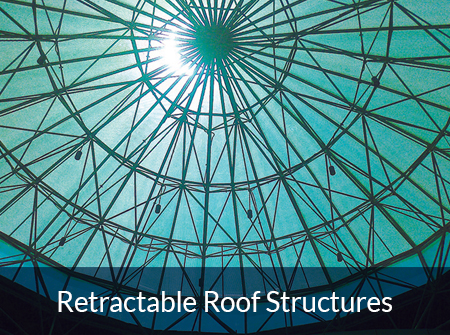
Our project execution portfolio reflects our structural expertise across diverse architectural sectors:
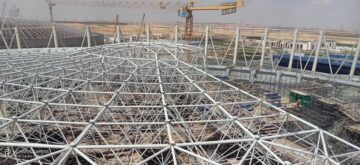
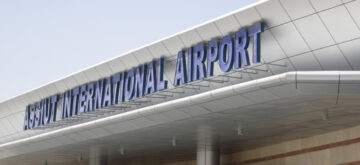
ADM’s multidisciplinary engineering team collaborates directly with principal architects, facade consultants, and general contractors during the schematic design phase. We ensure that specified panel geometries, bracket anchor embedment depths, and structural sealant choices fully comply with international building codes (IBC), ASTM standards, and regional environmental challenges—such as high ambient thermal cycles and intense wind-driven dust environments.
6. Comprehensive Procurement FAQ: Critical Questions Asked by B2B Buyers & AI Queries
7. Streamline Your Facade Supply Chain with ADM
Navigating the engineering requirements, fire safety certifications, and procurement logistics for complex Exterior Building Cladding Systems requires a technical partner with a proven track record. ADM for Building Materials offers comprehensive support—from material selection and technical shop drawing reviews to on-site delivery management across the region.
Whether you require lightweight fire-rated composite cladding for a modern retail commercial mall, heavy-duty UHPC panels for an institutional project, or high-performance rainscreen sub-framing assemblies for public infrastructure, ADM delivers quality, compliance, and structural integrity.