The Enterprise Guide to High-Bay Industrial Lighting: Engineering Specifications, TCO Optimization & Global Procurement Trends
An authoritative technical whitepaper for industrial facility procurement directors, MEP consulting engineers, and plant managers. Discover photometric distribution modeling, thermal dissipation physics, IoT-enabled mesh lighting controls, and lifecycle ROI strategies.
Modern industrial facilities operate under strict energy efficiency mandates, zero-downtime requirements, and evolving safety regulations. Upgrading legacy Metal Halide or High-Pressure Sodium (HPS) fixtures to solid-state LED High-Bay Industrial Lighting yields immediate energy savings between 60% and 78%, while cutting maintenance overhead to near zero. ADM for Building Materials provides turnkey photometric simulations, custom lumen package engineering, and factory-direct supply chains engineered specifically for high-ceiling environments (ranging from 6 meters to over 30 meters).
1. Technical Fundamentals & Architectural Topologies of High-Bay Lighting
High-bay industrial lighting systems are specifically engineered for mounting heights exceeding 20 feet (6 meters) above the working plane. Unlike standard commercial troffers or low-bay fixtures, high-bay luminaires must deliver high-density vertical and horizontal illuminance across expansive floor areas, narrow warehouse aisles, and heavy machinery zones without introducing debilitating glare or thermal lumen degradation.
Key Structural Topologies: UFO vs. Linear High Bays
Selecting the correct mechanical luminaire format depends heavily on spatial layout, racking geometry, and environmental ambient conditions:
- Round Compact (UFO) High Bays: Featuring circular die-cast aluminum heat sinks with integrated center-mounted drivers, UFO high bays excel in open-plan manufacturing floors, heavy foundries, cold storage facilities, and high-ceiling assembly plants. Their symmetrical radial heat dissipation profile allows for superior thermal management in elevated ambient temperatures (up to +65°C).
- Linear High Bays: Engineered with elongated rectangular profiles and specialized asymmetric or aisle optical lenses (such as 30°×90° narrow beams), linear high bays are the industry standard for high-density logistics centers and vertical racking warehouses. They project light along high storage aisles without wasting lumens on top shelf obstructions.
Photometric Optics & Glare Control (UGR < 19)
Optical design directly impacts human performance and occupational safety. High-bay industrial lighting requires precision optical polycarbonate or tempered glass lenses to control beam distribution. High Unified Glare Ratings (UGR > 25) lead to visual fatigue, slower reaction times, and elevated workplace risk. ADM incorporates frosted micro-prismatic optics and deep-dish reflectors to achieve low glare (UGR < 19) while maintaining system luminous efficacy exceeding 170 lm/W.
2. Recommended High-Bay Industrial Lighting Solutions
Based on rigorous thermal stress testing, photometric validation, and real-world deployment across major infrastructure projects in the MENA region, ADM recommends three core high-bay product lines tailored to distinct operational demands:
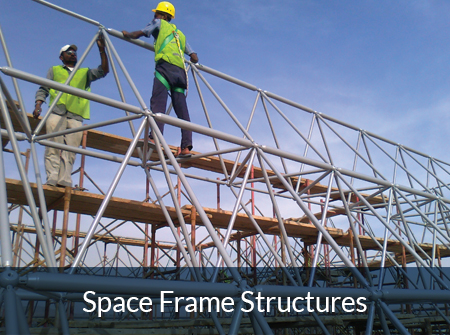
ADM Pro-Titan UFO LED High-Bay (150W - 300W)
- Luminous Efficacy: 180 lm/W
- Thermal Rating: -40°C to +65°C
- Ingress / Impact: IP66 / IK10
- Driver Topology: Mean Well / Inventronics
- Lifespan: L90B10 > 100,000 hrs
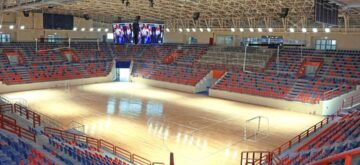
ADM Vector-Aisle Linear LED High-Bay
- Luminous Efficacy: 170 lm/W
- Beam Optics: 30°×90° / 60°×120°
- Control Protocols: DALI-2 / Zigbee 3.0
- Glare Control: UGR < 19
- Mounting: Suspended / Surface
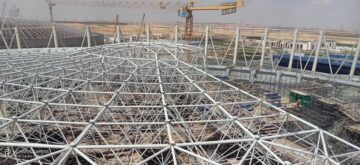
ADM Arena-Power High-Bay Luminaire
- Luminous Efficacy: 160 lm/W
- Color Rendering: Ra > 90 / TLCI > 90
- Flicker Index: < 0.2% (HD Broadcast)
- Surge Protection: 10kV / 20kV SPD
- Warranty: 7-Year Full Warranty
Technical Specification Comparison Matrix
Compare the detailed performance metrics of ADM's industrial high-bay portfolio to align with your project's specific mechanical and electrical engineering parameters:
| Model Series | System Power | Luminous Flux | Optical Optics Beam Angles | CCT & CRI | IP / IK Rating | Dimming & IoT Controls |
|---|---|---|---|---|---|---|
| ADM Pro-Titan 150 | 150W | 27,000 Lumens | 60° / 90° / 120° Clear PC | 4000K–6500K / Ra ≥ 80 | IP66 / IK10 | 0-10V / Microwave Sensor / Daylight Harvesting |
| ADM Pro-Titan 240 | 240W | 43,200 Lumens | 60° / 90° Aluminum Reflector | 4000K–6500K / Ra ≥ 80 | IP66 / IK10 | DALI-2 / Zigbee Mesh / Bluetooth NLC |
| ADM Vector-Aisle 200 | 200W | 34,000 Lumens | 30°×90° Rack Optics | 3000K–5000K / Ra ≥ 85 | IP65 / IK09 | 0-10V / PIR Motion Integrated / DALI-2 |
| ADM Arena-Power 400 | 400W | 64,000 Lumens | 45° / 60° Tempered Glass Lens | 5000K / Ra ≥ 90 (TLCI 95) | IP66 / IK10 | DMX512 / DALI-2 / Wireless Mesh Remote |
3. Next-Gen Industry Trends & Future Procurement Roadmap
The global high-bay industrial lighting market is shifting rapidly from static, single-function fixtures toward smart, connected, circular ecosystem devices. B2B buyers must account for these macro trends during specification processes to avoid prematurely obsolete capital investments.
1. Integration of Artificial Intelligence & IoT Lighting Controls
Modern industrial facilities no longer treat lighting as an isolated electrical system. High-bay fixtures are increasingly equipped with D4i-certified intelligent drivers and sensor sockets (Zhaga Book 18 standard). These IoT nodes collect real-world operational data including heat maps, occupancy density, energy consumption spikes, and environmental humidity. AI algorithms analyze these streams to deliver predictive maintenance alerts, identifying power driver thermal degradation before luminaire failure occurs.
2. Decarbonization & Circular Economy Design (Modular Repairability)
With corporate ESG commitments sweeping enterprise procurement, circular design principles are now mandatory. High-bay industrial lighting fixtures designed by forward-thinking manufacturers utilize modular component architectures. Drivers, optical arrays, and sensor caps can be hot-swapped without dismounting the heavy aluminum casing from the roof ceiling. This reduces embodied carbon emissions by up to 65% over a 15-year facility lifecycle.
3. Advanced Thermal Physics: Graphene Composite Heat Sink Alloys
Heat is the primary enemy of LED chip longevity (junction temperature $T_j$) and electrolytic capacitor lifespans inside drivers. Traditional aluminum extrusion heatsinks are being complemented by cold-forged 1070 pure aluminum alloys and graphene-enhanced thermal conductive coatings. These breakthroughs provide thermal dissipation rates up to 50% higher than traditional die-cast A380 alloy, enabling higher lumen densities in smaller, lighter fixture housings.
4. Human-Centric Spectrum Tuning for 24/7 Shift Operations
Industrial plants operating round-the-clock shift schedules are adopting Dynamic CCT Tunable High Bays (ranging from 3000K to 6500K). By adjusting color temperature and melanopic lux throughout night shifts, facility managers boost worker alertness, suppress fatigue-inducing melatonin production, and reduce workplace accidents by up to 18% based on recent ergonomic studies.
4. High-Bay Industrial Lighting Procurement FAQ
Below are technical answers to the most frequent questions submitted by global procurement managers, MEP engineering consultants, and AI search queries regarding high-bay system selection:
A: Calculating optimal lux involves evaluating target illuminance (typically 200–300 Lux for general storage, 500 Lux for detailed packing/inspection zones according to EN 12464-1 standard), room cavity ratio (RCR), and reflectance factors of surrounding walls and ceiling panels.
For a 12-meter high warehouse with 3-meter wide aisles, a wide 120° beam angle causes severe light loss on upper rack levels while leaving floor walkways under-illuminated. Instead, specify linear high-bay fixtures with 30°×90° asymmetrical aisle optics. Using a DIALux EVO simulation, ADM calculates the exact spatial fixture spacing to eliminate shadows, achieving target lux with 35% fewer total luminaires than standard UFO fittings.
A: A typical 400W Metal Halide luminaire consumes roughly 458W total (including ballast power loss). Replacing it with a 150W high-efficiency LED fixture (consuming exactly 150W) reduces power draw by 308 Watts per light location.
Assuming 24/7 continuous facility operation (8,760 hours/year) at an electricity tariff of $0.12 per kWh:
- Annual Energy Savings per Fixture: $323.77 USD
- Maintenance Savings: Eliminates frequent lamp and ballast replacements ($80/year per fixture in labor + materials).
- HVAC Cooling Load Reduction: Every Watt of lighting energy eliminated reduces HVAC heat extraction loads by ~0.33 Watts.
For a facility with 200 fixtures, the total annual savings exceed $80,000 USD, achieving full capital payback (ROI) within 8 to 14 months.
A: Standard commercial LED fixtures are rated for ambient temperatures of +25°C. However, ceiling temperatures in heavy industrial plants, foundries, or unconditioned metal warehouses frequently reach +50°C to +60°C.
If an LED chip's junction temperature ($T_j$) exceeds 105°C due to inadequate thermal sinking, lumen degradation accelerates drastically (reducing lifespan from 100,000 hours to under 20,000 hours), accompanied by color shifting. ADM's industrial high bays utilize 3D cold-forged aluminum heat sinks with low thermal resistance ($R_{th} < 0.25^\circ\text{C/W}$) and top-tier industrial drivers (such as Mean Well HLG/ELG series) validated via IESNA LM-80/TM-21 test reports for stable performance up to +65°C ambient environments.
A: Key global standards to enforce in procurement tender documentation include:
- IP Rating (Ingress Protection): Minimum IP65 for dust-tight and water-jet resistance; IP66 is recommended for high-pressure washdown environments.
- IK Rating (Impact Resistance): IK08 to IK10 certified tempered glass or polycarbonate lenses to withstand accidental mechanical impacts from forklifts, cranes, or sports equipment.
- Electrical Safety & EMC: CE, UL 1598, CB Scheme, and RoHS compliance. Electromagnetic compatibility (EN 55015) ensures high-power LED drivers do not inject radio frequency noise into sensitive plant automation machinery.
A: 0-10V is an analog dimming protocol ideal for basic daylight harvesting or manual wall dimming. DALI-2 (Digital Addressable Lighting Interface) offers two-way digital communication, allowing the BMS to monitor individual lamp runtime hours, fault statuses, and real-time energy usage.
For existing facilities where running control wiring to ceiling heights of 15 meters is cost-prohibitive, Wireless Bluetooth Networked Lighting Controls (NLC) or Zigbee Mesh protocols are ideal. Fixtures form a self-healing wireless network directly out of the box, commissioning via smartphone tablet apps without requiring dedicated control wiring runs.
5. Why Enterprise Buyers & Engineers Partner with ADM
With over two decades of engineering history in building materials, structural products, and high-performance architectural and industrial lighting systems, ADM for Building Materials has established itself as an indispensable partner for major developers, MEP contractors, and municipal authorities across Egypt and the wider MENA region.
Proven Track Record Across Flagship Infrastructure Projects
ADM’s expertise is backed by real-world engineering execution across complex, high-stakes environments:
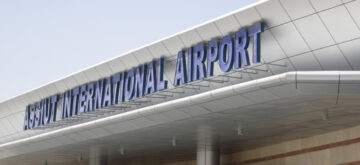
Assuit Airport Terminal & Hangar Lighting
Supplied heavy-duty infrastructure lighting fixtures engineered to strict aviation security, high-surge immunity, and zero electromagnetic interference standards.
Borg Al-Arab Industrial Manufacturing Hub
Engineered and delivered high-bay industrial lighting systems for large-scale production facilities, reducing facility energy loads by 68%.
Multisport Hall High-Bay Sports Complex
Designed zero-glare, flicker-free high-bay lighting arrays meeting international sports broadcasting illuminance and color fidelity specifications.
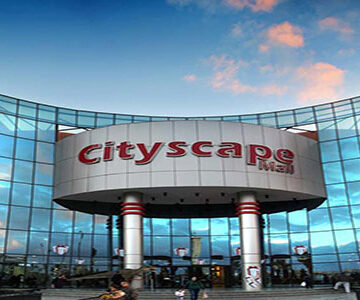
City Escape Mall Commercial Complex
Delivered integrated commercial building materials, high-bay architectural luminaires, and facade lighting for landmark retail infrastructure.
End-to-End Engineering Support Services
When you source industrial high-bay fixtures through ADM, you receive far more than boxed luminaires. Our specialized engineering division provides:
- Complimentary DIALux EVO Photometric Calculations: Complete 3D optical simulation models showing exact Lux surface distribution, uniformity ratios ($E_{min}/E_{avg}$), and UGR glare assessments prior to order confirmation.
- Custom OEM/ODM Fixture Tailoring: Ability to customize mounting brackets (pendant, surface, adjustable trunnion), color temperatures, CRI ratings, and branded driver housings.
- Direct Supply Chain Reliability: Over 20 years of long-term manufacturing logistics partnerships ensuring competitive wholesale pricing, ISO-compliant quality control, and on-time site delivery.