
Knowledge Hub & Insights

ADM Construction & Lighting Articles

Explore technical insights, architectural lighting trends, and engineering solutions from Egypt's trusted building materials specialist.

0%

Choosing the best China LED Architectural Lighting Fixtures supplier requires more than comparing catalog prices. A dependable partner should combine verified manufacturing experience, optical expertise, and consistent quality control. Project teams should examine photometric files, beam angles, color consistency, glare control, and thermal performance. Details matter. A narrow spotlight can sharpen a stone façade, while an uneven wall washer may expose every installation mistake.

Architect and lighting authority Alberto Campo Baeza once said, “Light is the first material of architecture.” His words remain highly relevant to modern LED Architectural Lighting Fixtures. The fixture is not merely hardware. It shapes atmosphere, reveals texture, and supports the building’s identity. Therefore, buyers should review LED binning, CRI performance, CCT stability, dimming compatibility, IP ratings, and expected lifetime. Factory audits, sample testing, and independent certifications can provide stronger evidence than promotional claims.

However, no supplier checklist is perfect. A polished website does not guarantee reliable production. Even a respected factory may struggle with a custom housing or tight delivery schedule. This article examines leading Chinese suppliers through practical criteria, including design capability, production capacity, quality assurance, customization, warranty support, and international project experience. It also considers how suppliers handle failures, revisions, and technical questions. That part is easy to overlook. Yet honest communication often separates a long-term lighting partner from a short-term seller.
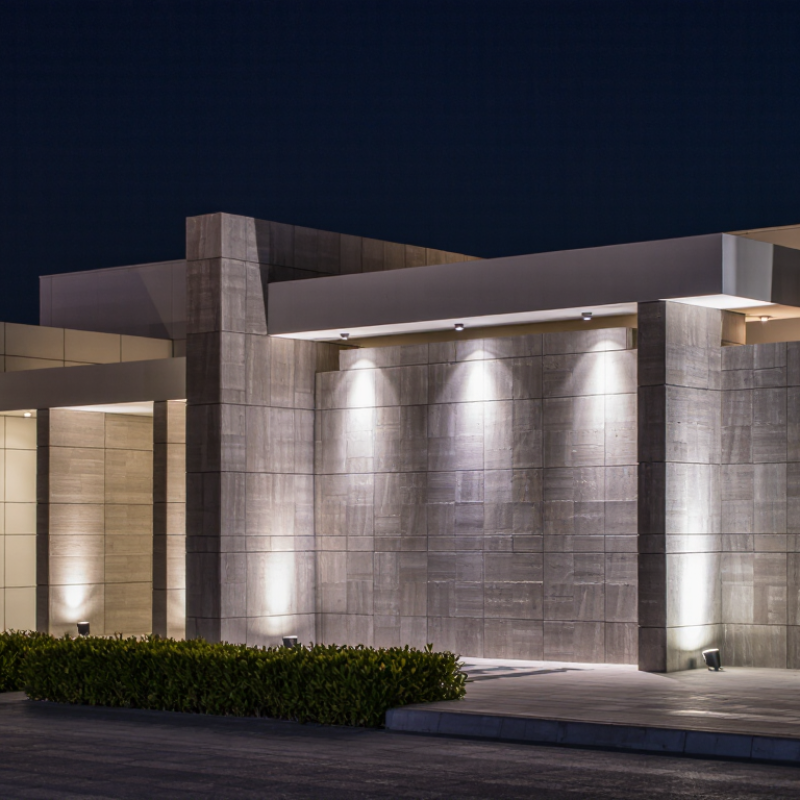
China Best LED Architectural Lighting Fixtures Suppliers?

What Are LED Architectural Lighting Fixtures?

What Are LED Architectural Lighting Fixtures?

LED architectural lighting fixtures are purpose-built luminaires that shape how buildings look and function. They use light-emitting diodes, optics, housings, and control systems. Unlike ordinary lamps, they are designed for façades, pathways, interiors, ceilings, and landscape structures. Their beams can highlight stone textures, guide visitors, or create soft layers across a lobby.

In practical projects, fixture selection depends on more than brightness. I check beam angle, color temperature, color rendering, ingress protection, heat management, and installation access. A narrow beam can sharpen columns, while a wider beam can wash an entire wall. Outdoor products need suitable weather resistance. Poor heat control may shorten LED life. That detail is easy to miss.

Tips: Ask suppliers for photometric files, test samples, warranty terms, and installation guidance. Compare measured performance, not impressive claims. Confirm dimming compatibility before ordering. Leave room for maintenance. I once underestimated access around recessed fixtures, and later servicing became unnecessarily difficult. Good lighting is rarely only about appearance; it must remain dependable after the project photographs are finished.

Key Types of Architectural LED Lighting Fixtures

Architectural LED lighting fixtures shape how people read a building. The main types include recessed downlights, adjustable spotlights, linear profiles, wall washers, and cove lights. Each fixture serves a different visual purpose. Recessed downlights create controlled pools of light on floors and work surfaces. Adjustable spotlights highlight artwork, columns, or textured walls. Linear LEDs provide clean lines along ceilings, shelves, and façades.

Wall washers spread light across broad surfaces with fewer harsh shadows. Wall grazers sit closer to walls and reveal brick, stone, or concrete texture. Cove lights hide inside ceiling recesses, producing soft indirect illumination. Outdoor projects may require inground lights, step lights, or façade fixtures with strong weather protection. Check the IP rating carefully. A high rating does not correct poor drainage or careless installation.

In practical projects, I compare beam angle, glare control, color rendering, and heat management before selecting a fixture. CRI above 90 is often suitable for galleries, retail areas, and hospitality interiors. Narrow beams add drama, while wider beams feel calmer and more even. Dimmable drivers and compatible control systems also matter. Flicker can become uncomfortable, even when customers cannot explain why. I once chose a bright fixture that looked impressive in samples but created unwanted reflections on polished stone. That mistake changed my selection process. Light output alone is never enough. Reliable suppliers should provide photometric files, testing reports, clear warranty terms, and consistent color performance across production batches.

How to Evaluate Chinese LED Lighting Suppliers

How to Evaluate Chinese LED Lighting Suppliers

A supplier’s website is only a starting point. Request a factory profile, production photos, and recent project references. Check whether the facility actually produces fixtures, drivers, or only assembles them. A video call can reveal useful details. Look for aging-test racks, dust control, and organized component storage.

Ask for a complete sample before discussing large quantities. Inspect its aluminum housing, coating thickness, cable entry, seals, and mounting hardware. Test light distribution in the real installation area. A bright sample may still create glare. Request photometric files, color-consistency data, power-factor results, and thermal test records. For outdoor projects, verify suitable IP and impact ratings. Certificates should match the destination market and the exact product model.

Reliable suppliers explain their quality process clearly. Ask how they control LED bins, driver changes, incoming materials, and final inspections. Compare the warranty with its exclusions, response time, and replacement procedure. Confirm lead times in writing, including sample approval and packaging. Communication matters. Slow answers often become slower after payment. That is not always true, but it deserves attention.

Do not judge by price alone. A cheaper fixture may use thinner metal or weaker thermal management. I have seen attractive samples fail after installation because heat was ignored. Still, one successful sample proves little. Request a small pilot batch and inspect several units. Suppliers can improve, but buyers must document every assumption.

Leading China-Based LED Architectural Lighting Manufacturers

China Best LED Architectural Lighting Fixtures Suppliers?

China-based LED architectural lighting manufacturers serve hotels, retail spaces, offices, museums, and outdoor developments worldwide. The best supplier is not always the largest factory. It should understand beam control, glare reduction, color consistency, and installation conditions.

Experienced manufacturers usually provide photometric files, product samples, testing records, and clear information about LED performance. Ask about CRI, color temperature, lumen maintenance, IP rating, and operating life. For a façade project, check housing materials and drainage details. For an interior installation, inspect glare, dimming response, and driver noise. Local compliance still matters, because lighting requirements vary by market.

Tips: Request one sample before placing a large order. Test it at the intended mounting height. Compare the beam pattern on the actual wall or ceiling. Also review factory quality procedures, inspection reports, packaging methods, and after-sales response times. A video call with the production team can reveal useful details, but it cannot replace an independent inspection.

Pricing deserves careful attention. A low quotation may exclude control systems, custom finishes, spare drivers, or export packaging. I once underestimated the impact of inconsistent white tones across a long corridor. It looked minor in the sample room, but obvious on site. This is why stable binning, documented tolerances, and a written approval process are essential. Good China-based manufacturers welcome technical questions and admit limitations. That honesty is often more valuable than impressive brochures.

China Best LED Architectural Lighting Fixtures Suppliers?

Typical LED efficacy ranges by architectural lighting fixture category

The chart compares common LED architectural lighting categories using typical luminous efficacy ranges measured in lumens per watt (lm/W). Actual performance varies according to LED package, optics, driver efficiency, color temperature, and operating conditions. The figures represent general industry ranges rather than any specific company or brand.

Quality Standards, Customization, and Export Capabilities

China Best LED Architectural Lighting Fixtures Suppliers?

Quality begins with evidence, not attractive catalog images. The International Energy Agency reports that lighting uses about 15% of global electricity. Efficient architectural fixtures therefore need measured performance. Ask suppliers for LM-79 photometric reports, LM-80 lifetime data, and TM-21 projections. IEC 60598 compliance also matters for safety and construction quality. A reliable factory should explain testing conditions clearly.

Customization should include more than housing colors. Experienced suppliers can adjust beam angles, lumen output, color temperature, dimming protocols, and mounting details. For a hotel corridor, a 24-degree beam may create controlled wall grazing. For a museum, low-glare optics and stable color rendering are more important. Specify CRI, R9, flicker limits, ingress protection, and operating temperature. The U.S. Department of Energy’s solid-state lighting research indicates that thermal management remains central to LED performance. Heat is easy to underestimate.

Export capability requires disciplined documentation. Suppliers should provide installation manuals, test reports, packaging records, and traceable production batches. Depending on the destination, buyers may require CE, RoHS, REACH, EMC, or local certifications. Check whether certificates match the exact model, not a similar product. That mistake happens. A factory may promise a 50,000-hour life, yet weak testing can make the figure questionable. Request samples, inspect aluminum thickness, review driver sourcing, and test fixtures under realistic conditions before placing a large order. References: International Energy Agency, Energy Efficiency 2023; U.S. Department of Energy, Solid-State Lighting R&D Opportunities.

China Best LED Architectural Lighting Fixtures Suppliers? - Quality Standards, Customization, and Export Capabilities
Evaluation Dimension Recommended Industry Benchmark Export and Project Relevance
Product Safety Standards Compliance with IEC 60598 requirements for luminaires, including electrical construction, insulation, wiring, and protection against electric shock. Request current test reports, product construction files, rated-voltage information, and declarations applicable to the destination market. Supports technical approval and reduces compliance risks for commercial, hospitality, landscape, and public-building projects.
Ingress Protection Indoor products commonly require IP20–IP44; outdoor architectural products generally require IP65 or above; exposed or water-prone installations may require IP66 or IP67. Check IP test reports, gasket design, cable glands, drainage structure, and whether the rating applies to the complete assembled fixture. Important for façades, canopies, gardens, coastal areas, wet locations, and projects exposed to dust or driving rain.
Impact Protection IK08 is commonly used for robust architectural applications; IK10 is preferred for public areas exposed to vandalism or accidental impact. Verify impact-test results and confirm that the tested lens, housing, mounting method, and optical accessories match the supplied configuration. Helps meet durability expectations for transport hubs, public plazas, retail areas, schools, and high-traffic environments.
LED Performance Typical architectural specifications include 80,000–100,000 hours of rated LED life, with the exact value dependent on operating temperature and lumen-maintenance criteria. Review LM-80 LED data, TM-21 projection where available, thermal test results, operating temperature limits, and warranty conditions. Provides a more reliable basis for lifecycle-cost calculations than quoting LED-chip life alone.
Color Quality CRI ≥80 is suitable for general architectural illumination; CRI ≥90 is commonly specified for galleries, hospitality, retail, residential, and premium interiors. Request photometric reports showing CRI, R9 where relevant, chromaticity coordinates, SDCM, and color-consistency tolerances. Supports consistent visual appearance across international projects and reduces noticeable color variation between batches.
Color Temperature Common CCT options include 2700K, 3000K, 3500K, 4000K, and 5000K; tunable-white solutions may cover approximately 2700K–6500K. Confirm available CCTs, binning standards, tolerance, dimming behavior, and whether the requested CCT is available for the required quantity. Allows the same product family to be adapted to regional design preferences and different lighting concepts.
Optical Control Typical options include narrow, medium, wide, asymmetric, wall-wash, grazing, and adjustable beam distributions, depending on the fixture type. Review IES or LDT files, photometric curves, beam-angle data, glare information, and sample performance under the intended mounting distance. Enables accurate lighting calculations and helps consultants coordinate the fixtures with local or international lighting software.
Dimming and Controls Common control interfaces include on/off, 0–10 V, DALI-2, DMX512, phase dimming, and wireless control, subject to product type. Verify protocol compatibility, minimum dimming level, flicker performance, driver brand-independent interoperability, and control-system test results. Improves compatibility with building-management, theatrical, hospitality, smart-city, and energy-management systems.
Flicker and Visual Comfort For offices, retail, hospitality, and camera-sensitive environments, specify low-flicker drivers and request measured flicker data such as PstLM and SVM where applicable. Ask for driver specifications, flicker-test reports, dimming test results, and confirmation of performance at different output levels. Reduces risks related to occupant comfort, photography, video recording, and demanding commercial applications.
Materials and Finishing Common constructions use die-cast aluminum or extruded aluminum housings, tempered glass or optical polymer lenses, and corrosion-resistant powder coating. Confirm aluminum grade, coating process, salt-spray or corrosion-resistance data when required, lens material, fastener material, and finish samples. Relevant to façade, coastal, landscape, and long-life installations where corrosion and finish consistency affect maintenance costs.
Customization Capability Qualified suppliers should be able to modify dimensions, optics, CCT, CRI, housing color, mounting accessories, cable length, connectors, labels, and control options. Evaluate engineering drawings, 3D files, prototype procedures, sample approval records, tooling ownership, and engineering-change controls. Supports project-specific specifications while reducing redesign work for architects, lighting designers, and electrical contractors.
Sample and Pilot Production A documented process should cover drawing approval, prototype production, photometric testing, installation trial, corrective action, and pre-production approval. Request a sample schedule, approval checklist, pilot-run inspection plan, and clearly defined rules for changes after sample approval. Helps control project risk before mass production and international shipment.
Quality Management An ISO 9001-certified quality-management system is a useful baseline, supported by incoming, in-process, and final inspection procedures. Check certificate validity, inspection records, calibration records, corrective-action reports, and sampling standards such as ISO 2859-1 where used. Creates traceable quality evidence for distributors, contractors, consultants, and project owners.
Electrical Compatibility Products should be configured for the destination voltage and frequency, such as 100–240 V AC, 50/60 Hz, when supported by the driver design. Confirm input range, power factor, total harmonic distortion, surge protection, driver certifications, and compatibility with local electrical systems. Reduces installation failures caused by incorrect voltage, frequency, driver selection, or protection requirements.
Market Certifications Destination-dependent documentation may include CE-related compliance, RoHS, EMC evidence, UKCA, UL or ETL-related requirements, and other local approvals. Verify that certificates and reports apply to the exact model, driver, LED configuration, and production site rather than to a similar product. Supports customs clearance, tender submissions, distributor onboarding, and local authority or consultant review.
Photometric Documentation Professional suppliers should provide IES or LDT files, lumen output, wattage, efficacy, beam angle, color data, and measurement conditions. Check whether files correspond to the final optical system and whether test data comes from an appropriately calibrated integrating sphere or goniophotometer. Allows overseas design teams to perform lighting calculations and compare products on a consistent basis.
Warranty and Service A written warranty commonly covers a defined period, with exclusions, operating conditions, replacement procedures, and spare-part responsibilities clearly stated. Review warranty duration, response time, replacement policy, driver and LED coverage, spare-parts availability, and after-sales communication process. Important when fixtures are installed far from the manufacturing location and replacement logistics may be costly.
Packaging and Transit Protection Packaging should protect optical surfaces, painted finishes, connectors, and adjustable components through handling and long-distance transport. Inspect packaging drawings, drop-test or transit-test procedures, moisture protection, palletization, carton markings, and spare-component packaging. Reduces damage, claims, and installation delays during container, air, or courier shipments.
Export Documentation A capable export process should provide commercial invoices, packing lists, certificates of origin when required, shipping marks, and product compliance documents. Confirm Incoterms capability, HS-code support, customs-document accuracy, export packing standards, and coordination with nominated freight forwarders. Improves customs efficiency and supports delivery planning for international construction schedules.
Production and Delivery Capacity Capacity should be evaluated by approved-model output, driver and LED availability, production lead time, inspection capacity, and peak-season resilience. Request a realistic production schedule, capacity statement, critical-component sourcing plan, batch traceability, and contingency arrangements. Helps align manufacturing with phased international projects and reduces the risk of partial or late deliveries.
The benchmarks above are general procurement guidelines for architectural LED lighting. Actual requirements should be confirmed against the project specification, installation environment, destination-market regulations, and the final product configuration.

FAQS

What are the main types of architectural LED fixtures?

Common types include recessed downlights, adjustable spotlights, linear profiles, wall washers, wall grazers, and cove lights. Each creates a different visual effect.

Which fixture works best for highlighting artwork or textured walls?

Adjustable spotlights suit artwork, columns, and textured surfaces. Narrow beams create drama, but glare can become uncomfortable.

How do wall washers differ from wall grazers?

Wall washers spread light broadly with softer shadows. Wall grazers sit closer to walls and reveal brick, stone, or concrete texture.

What should I check before selecting an LED fixture?

Compare beam angle, glare control, color rendering, dimming compatibility, flicker, and heat management. Light output alone is never enough.

Why is a high IP rating not sufficient outdoors?

A high IP rating helps resist dust and water. Poor drainage or careless installation can still cause failures.

How can I evaluate an unfamiliar lighting supplier?

Request factory details, production photos, project references, and a complete sample. A video call may reveal testing equipment and storage conditions.

What should I inspect in a lighting sample?

Check the aluminum housing, coating, cable entry, seals, mounting hardware, and light distribution. Test it in the actual installation area.

Which documents should a supplier provide?

Request photometric files, thermal records, color-consistency data, test reports, manuals, warranty terms, and traceable batch information. Missing documents deserve attention.

How should customized architectural lighting be specified?

Define beam angle, lumen output, color temperature, CRI, R9, flicker limits, dimming protocol, mounting details, and operating temperature.

Why should buyers use a pilot batch?

One successful sample proves little. Inspect several pilot units for color consistency, heat behavior, finish quality, and installation problems. Samples can deceive.

Conclusion

LED Architectural Lighting Fixtures are specialized lighting products designed to enhance the appearance, safety, and functionality of indoor and outdoor structures. They include linear lights, wall washers, spotlights, recessed fixtures, floodlights, façade lighting, and landscape-oriented systems. These solutions can support decorative effects, wayfinding, accent lighting, and energy-efficient illumination while offering flexible color temperatures, beam angles, controls, and installation methods.

When evaluating Chinese LED lighting suppliers, buyers should examine product quality, optical performance, thermal management, material durability, certifications, testing procedures, production capacity, and after-sales service. Reliable manufacturers should also provide customization options, such as tailored dimensions, housing finishes, light distributions, control compatibility, and packaging. Export experience, documentation, quality consistency, lead times, and communication capabilities are equally important. By comparing technical specifications, compliance records, sample performance, and project support, customers can select a dependable supplier for architectural lighting projects in commercial, residential, hospitality, public, and landscape environments.

Sophia

Sophia

Sophia is a dedicated marketing professional with a deep understanding of our company’s innovative products and services. With a keen eye for detail and a passion for communication, she plays a pivotal role in enhancing our online presence by regularly updating our company blog with insightful and......