
ADM Construction & Lighting Articles
Explore technical insights, architectural lighting trends, and engineering solutions from Egypt's trusted building materials specialist.
China Top 10 Structural Construction Materials Suppliers?
Table of Contents
- Definition and Scope of Structural Construction Materials
- Key Criteria for Ranking China’s Top Suppliers
- China’s Top 10 Structural Construction Materials Suppliers
- Product Categories, Standards, and Manufacturing Capabilities
- How to Select the Right Chinese Structural Materials Supplier
- FAQS
- Conclusion
- Related Posts
Choosing reliable Structural Construction Materials suppliers in China requires more than comparing product prices. A supplier may offer competitive steel, concrete components, fasteners, or engineered systems, yet still fail on traceability, testing, or delivery consistency. This guide introduces ten notable suppliers through practical procurement criteria, including manufacturing capability, product range, quality systems, export experience, and customer support.
The evaluation considers details that matter on real construction sites. These include mill certificates, material grades, dimensional tolerances, welding procedures, coating thickness, and batch identification. Factory audits, independent inspections, and verified project records also deserve attention. A polished website is not enough.
Not every supplier fits every project.
The ranking should therefore be viewed as a practical reference, not a permanent verdict. Market conditions change, production capacity varies, and even experienced manufacturers can make occasional mistakes. Delivery delays, unclear technical drawings, or incomplete documentation may create expensive problems after signing. Buyers should confirm current certifications, sample quality, production schedules, and applicable building standards before placing an order. Currency risk, packaging damage, and communication gaps also deserve careful review.
With a balanced approach, this overview helps engineers, contractors, and international buyers compare China’s leading Structural Construction Materials suppliers more responsibly. The goal is not to promote the largest name, but to identify partners that combine measurable quality, transparent communication, and dependable project performance.
Definition and Scope of Structural Construction Materials
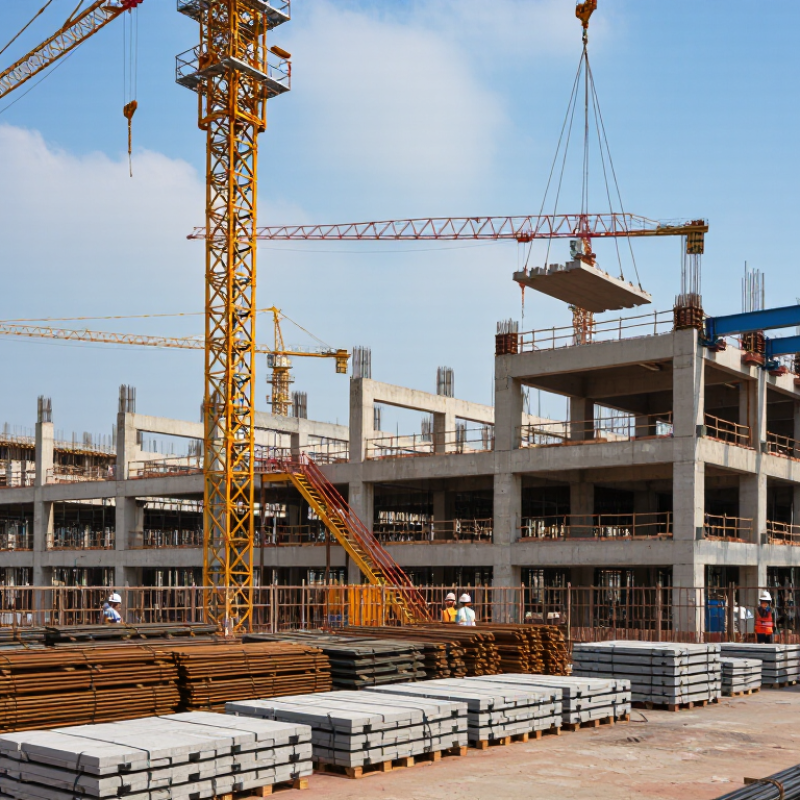
Structural construction materials are products designed to carry, transfer, or resist building loads. They form the skeleton of a project, including foundations, columns, beams, slabs, walls, roofs, and connections. Common categories include reinforced concrete, structural steel, masonry, natural timber, engineered wood, and fiber-reinforced composites. Fasteners, reinforcement bars, anchor systems, and protective coatings may also qualify when they directly support structural performance.
The boundary is not perfectly clean. A concrete wall can separate rooms, yet it may also resist wind and seismic forces. A steel deck can act as flooring, formwork, or part of a composite slab. Procurement teams should examine strength, durability, fire resistance, corrosion behavior, service life, and verified production standards. The International Energy Agency reports that cement production remains responsible for roughly 7% of global energy-related carbon dioxide emissions. Material selection therefore affects both safety and environmental performance.
China’s scale makes supplier evaluation especially important. World Steel Association data recorded about 1.01 billion tonnes of crude steel production in China during 2024. That volume indicates manufacturing capacity, but it does not prove consistent quality. Buyers still need mill certificates, batch traceability, dimensional checks, and independent laboratory testing.
The World Bank’s Commodity Markets Outlook also shows how steel and energy prices can shift quickly. A low quotation may not remain low after transport, testing, waste, and replacement risks. This is where supplier comparisons often need more reflection. Reliability is measured on site, not only in a catalogue.
Key Criteria for Ranking China’s Top Suppliers
China Top 10 Structural Construction Materials Suppliers?
Ranking China’s top structural construction materials suppliers requires more than comparing price lists. A reliable assessment starts with verified production capacity, product consistency, and documented project experience. Suppliers should provide mill certificates, test reports, and traceability records for steel, concrete components, or engineered panels. These documents help confirm strength, dimensions, chemical composition, and batch history.
Quality systems matter. Look for current certifications, calibrated testing equipment, and clear inspection procedures. Factory audits can reveal practical details, such as storage conditions, welding controls, and packaging methods.
Delivery performance also deserves careful review. Compare quoted lead times with completed orders, port experience, and responses during material shortages. Financial stability and transparent communication are less visible, yet they can strongly affect long projects. Independent laboratory testing is valuable when samples appear unusually strong or inexpensive.
Tips: Request three recent project references, not only testimonials. Check whether production matches the approved sample. Ask who pays for re testing if results fail. Visit the facility when possible. Photos are useful, but not proof.
A ranking should also consider technical support, customization, complaint handling, and environmental documentation. However, no ranking remains perfect. Supplier data can change, and public claims may omit failed deliveries or delayed certifications. My practical approach is to score each supplier against the same evidence based checklist, then review weak areas with an engineer. The lowest price may simply hide higher inspection, transport, or replacement costs. Small details matter.
China’s Top 10 Structural Construction Materials Suppliers
China’s leading structural construction materials suppliers serve projects from factory buildings to high-rise residential complexes. The strongest suppliers usually cover reinforced steel bars, H-beams, steel plates, wire rod, welded pipes, precast concrete, cement, structural timber, aluminum profiles, and fasteners. Their value is not limited to production capacity. Consistent dimensions, stable chemical composition, and dependable delivery matter on every jobsite.
An experienced buyer should request mill certificates, third-party test reports, and production records before placing a large order. Samples should be checked for yield strength, tensile strength, coating thickness, weld quality, and visible surface defects. A reliable supplier can explain its inspection process clearly. It should also provide traceable batch numbers and practical export documentation. Small details matter here. A missing certificate can delay installation.
Price comparisons need caution. A cheaper quotation may exclude testing, protective packaging, inland transport, or replacement support. I have found that clear tolerances often predict smoother site work than impressive sales promises. Still, no supplier is perfect. Moisture damage, schedule changes, and communication gaps can occur. Buyers should define acceptance standards, delivery milestones, and dispute procedures in writing. Factory audits are useful, but they cannot replace independent inspection. A careful sourcing decision balances material performance, production experience, documentation quality, and long-term reliability.
Product Categories, Standards, and Manufacturing Capabilities
China’s top structural construction material suppliers are best compared by product categories, standards, and production depth. The main categories include reinforcing bar, hot-rolled sections, steel plate, wire rod, cement, ready-mix concrete, precast components, and engineered connectors. China produced about 1.005 billion tonnes of crude steel in 2024, according to World Steel Association data. That scale supports large rolling mills, automated testing, and project-specific fabrication. Yet size alone proves little.
Standards matter more at the job site. Rebar should match GB/T 1499.2, while structural steel projects commonly reference GB 50017. Concrete design follows GB 50010. Export orders may also require EN, ASTM, or ISO documentation. A capable supplier should provide heat numbers, mill certificates, chemical analysis, tensile results, and dimensional records. Ask for recent batch evidence. Catalog claims are not enough.
Manufacturing capability separates the strongest ten candidates. Look for blast-furnace or electric-arc capacity, controlled rolling, galvanizing, CNC cutting, welding, and precast mould systems. The U.S. Geological Survey estimated China’s cement output near 1.8 billion tonnes in 2024, showing deep upstream capacity. Still, quality can vary between plants under one corporate group. Independent inspection remains sensible. Delivery data also needs scrutiny; reported capacity may exceed practical output during maintenance, power limits, or weak demand. A useful comparison should score compliance, traceability, testing facilities, export experience, and defect response—not only price. Industry rankings change quickly. That is the uncomfortable part.
| Profile | Typical Manufacturing Base | Primary Product Categories | Common Material Grades | Applicable Chinese Standards | Manufacturing Capabilities | Quality-Control and Testing Capabilities | Typical Application Areas |
|---|---|---|---|---|---|---|---|
| Supplier Profile 01 | North China steel-production region | Hot-rolled plates H-beams I-sections Angles | Q235B, Q355B, Q355D, Q420B | GB/T 700; GB/T 1591; GB/T 11263; GB/T 706 | Hot rolling, section rolling, plate cutting, CNC drilling, shot blasting, primer coating, and cut-to-length processing | Chemical analysis, tensile testing, impact testing, ultrasonic inspection, dimensional inspection, and heat-number traceability | Industrial buildings, warehouses, bridges, platforms, and heavy structural frames |
| Supplier Profile 02 | East China coastal manufacturing region | Reinforcing bars Wire rod Steel mesh | HRB400, HRB500, HPB300, low-carbon wire rod | GB/T 1499.1; GB/T 1499.2; GB/T 14981 | Electric-furnace or converter steelmaking, continuous casting, bar rolling, controlled cooling, coil processing, and mesh welding | Yield and tensile strength testing, elongation testing, bend and reverse-bend testing, rib geometry inspection, and chemical analysis | Concrete buildings, foundations, highways, tunnels, railways, and precast components |
| Supplier Profile 03 | Central China integrated steel region | Seamless pipes Mechanical tubes Hollow sections | 10, 20, Q355B, 16Mn, 20G where applicable | GB/T 8162; GB/T 17395; GB/T 6728 | Hot piercing, mandrel rolling, heat treatment, sizing, straightening, beveling, and non-destructive testing | Hydrostatic testing, eddy-current or ultrasonic testing, tensile testing, flattening testing, hardness testing, and dimensional verification | Steel structures, machinery, construction columns, trusses, and fluid-free load-bearing applications |
| Supplier Profile 04 | South China fabrication and export region | Welded steel pipes Spiral pipes Square tubes Rectangular tubes | Q235B, Q355B, S235JR, S355JR | GB/T 3091; GB/T 6725; GB/T 6728 | ERW forming, spiral submerged-arc welding, square-tube forming, automatic welding, end facing, coating, and pipe bundling | Weld-seam ultrasonic inspection, hydrostatic testing, flattening testing, weld appearance inspection, coating-thickness testing, and dimensional checks | Columns, roof structures, scaffolding, piling support, fencing, and general construction frameworks |
| Supplier Profile 05 | Northwest China steel-processing region | Cold-formed sections C-sections Z-sections Decking profiles | Q235, Q355, S350GD, galvanized structural steel | GB/T 6725; GB/T 2518; GB/T 12754 | Roll forming, galvanized coil slitting, punching, embossing, profile cutting, automated stacking, and protective-film application | Coating-mass testing, yield and tensile testing, profile geometry inspection, corrosion-resistance checks, and salt-spray testing where specified | Light-gauge buildings, roof purlins, wall systems, ceiling frames, and composite floor decks |
| Supplier Profile 06 | Yangtze River Delta precision-processing region | Stainless structural products Stainless tubes Stainless plates Handrails | 06Cr19Ni10, 06Cr17Ni12Mo2, 022Cr17Ni12Mo2 | GB/T 20878; GB/T 14976; GB/T 4237 | Cold rolling, tube forming, TIG or laser welding, solution annealing, pickling, polishing, laser cutting, and fabrication | Positive material identification, corrosion-related testing, tensile testing, intergranular corrosion testing where required, weld inspection, and surface-finish inspection | Architectural façades, public facilities, coastal structures, food-processing areas, and corrosive environments |
| Supplier Profile 07 | Southwest China fabrication region | Fabricated steel structures Box girders Trusses Steel stairs | Q235B, Q355B, Q355C, Q355D | GB 50017; GB/T 700; GB/T 1591; GB 50205 | CNC plasma or flame cutting, submerged-arc welding, robotic welding, assembly, straightening, shot blasting, painting, and site-installation support | Welding-procedure qualification, welder qualification, visual inspection, magnetic-particle or ultrasonic testing, dimensional inspection, and coating inspection | Factories, sports facilities, bridges, exhibition halls, airports, and large-span buildings |
| Supplier Profile 08 | North China fastener and metal-component region | Structural bolts Anchor bolts Threaded rods Washers | Grade 8.8, 10.9, 12.9; Q235 and Q355 anchor components | GB/T 1228; GB/T 1229; GB/T 1230; GB/T 1231; GB/T 3098.1 | Cold heading, thread rolling, heat treatment, hot-dip galvanizing, mechanical plating, sorting, and torque-control packaging | Tensile and proof-load testing, hardness testing, torque-tension testing, coating-thickness inspection, thread-gauge inspection, and lot traceability | Steel connections, bridges, towers, industrial equipment, and seismic-resistant assemblies |
| Supplier Profile 09 | Central and East China plate-processing region | Shipbuilding plates Weathering steel High-strength plates Cut parts | Q355NH, Q355GNH, Q460C, AH36-type grades where approved | GB/T 4171; GB/T 1591; GB/T 712 | Controlled rolling, normalized or thermo-mechanical processing, heavy-plate cutting, edge milling, profiling, and formed-part production | Impact testing, tensile testing, ultrasonic testing, weldability review, surface inspection, dimensional control, and material-certificate verification | Bridges, railway structures, port facilities, marine structures, heavy vehicles, and demanding outdoor applications |
| Supplier Profile 10 | South China prefabrication and modular-building region | Modular steel frames Prefabricated components Light steel systems Roof and wall panels | Q235B, Q355B, S350GD, galvanized coated steel | GB 50018; GB 50017; GB/T 2518; GB/T 12754 | Automated roll forming, CNC cutting, robotic assembly, panel lamination, insulation integration, powder coating, and modular pre-assembly | Dimensional inspection, coating-mass testing, fastener verification, weld inspection, thermal-performance checks, water-tightness testing, and assembly trial fitting | Prefabricated housing, construction-site offices, warehouses, cleanrooms, agricultural buildings, and temporary facilities |
How to Select the Right Chinese Structural Materials Supplier
Selecting a Chinese structural materials supplier requires more than ranking the “top 10.” China produced about 1,019 million tonnes of crude steel in 2023, according to World Steel Association data. That scale creates options, not automatic reliability. A capable supplier should provide recent mill certificates, heat numbers, production records, and test results for every batch. Ask whether certificates can be verified directly with the testing laboratory.
Check compliance before negotiating price. Compare the project specification with applicable GB, ISO, ASTM, or EN requirements. Request tensile strength, yield strength, chemical composition, dimensional tolerance, and weldability data. For concrete products, review compressive-strength results, curing records, and aggregate sources. The Global Status Report for Buildings and Construction has repeatedly identified buildings as a major source of global energy demand and emissions. Material efficiency therefore matters, not only purchase cost.
Visit the factory, or appoint an independent inspection agency. Observe storage conditions, corrosion protection, calibration labels, and packing methods. A supplier that cannot explain its nonconformance process deserves caution. Review delivery performance, minimum order quantities, export packaging, and replacement procedures in writing. Keep one approved sample for comparison. It sounds basic.
A low quotation may hide weaker traceability, delayed testing, or expensive rework. No checklist is perfect. I would also test a small trial order before approving large volumes. This step can reveal surface damage, inconsistent dimensions, and communication gaps that documents may miss. Supplier selection should balance verified quality, production capacity, technical response, and realistic lead times.
FAQS
They carry, transfer, or resist building loads. Common examples include concrete, steel, masonry, timber, and engineered wood. Fasteners, reinforcement bars, anchors, and protective coatings may also support structural performance. The boundary can be unclear.
Request mill certificates, batch records, heat numbers, and laboratory test reports. These documents should confirm strength, dimensions, chemical composition, and production history. Ask whether the testing laboratory can verify the certificates directly. Paperwork alone is not proof.
Compare samples with approved specifications and project requirements. Review tensile strength, yield strength, tolerances, weldability, or compressive strength. For concrete products, check curing records and aggregate sources. Independent testing is wise when results seem unusually strong.
A factory visit can reveal storage, welding, corrosion protection, and packaging conditions. Check calibration labels on testing equipment. Observe how materials are separated by batch. Photos help, but they are not proof.
Not always. A low price may hide weak traceability, delayed testing, transport damage, or costly rework. Compare inspection, delivery, waste, and replacement costs. The cheapest offer may become expensive later.
Confirm lead times, minimum order quantities, export packaging, and port experience. Include replacement procedures for damaged or failed materials. Ask how shortages affect production schedules. Vague promises create avoidable risk.
A small trial order can expose inconsistent dimensions, surface damage, and communication gaps. Keep one approved sample for later comparison. It sounds basic. Still, this step can prevent larger losses.
Use the same evidence-based checklist for every supplier. Score quality records, capacity, delivery history, technical support, and complaint handling. Review weak areas with a qualified engineer. No ranking is flawless, because supplier data can change.
Conclusion
This article provides a practical overview of China’s top 10 Structural Construction Materials suppliers, focusing on the products, capabilities, and standards that define reliable performance in modern building projects. It first explains the scope of structural materials, including steel products, reinforced concrete components, structural sections, panels, and related engineered solutions. It then outlines key ranking criteria such as product quality, manufacturing capacity, technical expertise, certification, delivery reliability, customization, and after-sales support.
The article also compares the product categories, testing procedures, production technologies, and compliance standards commonly used by leading Chinese suppliers. Rather than focusing only on price, it explains how buyers can assess material consistency, project experience, supply-chain stability, and communication efficiency. The final section offers practical guidance for selecting the right supplier according to project type, required specifications, budget, delivery schedule, and quality expectations, helping international buyers make informed and effective sourcing decisions.

Blog Tags: