
ADM Construction & Lighting Articles
Explore technical insights, architectural lighting trends, and engineering solutions from Egypt's trusted building materials specialist.
What Is High Bay Industrial Lighting?
Table of Contents
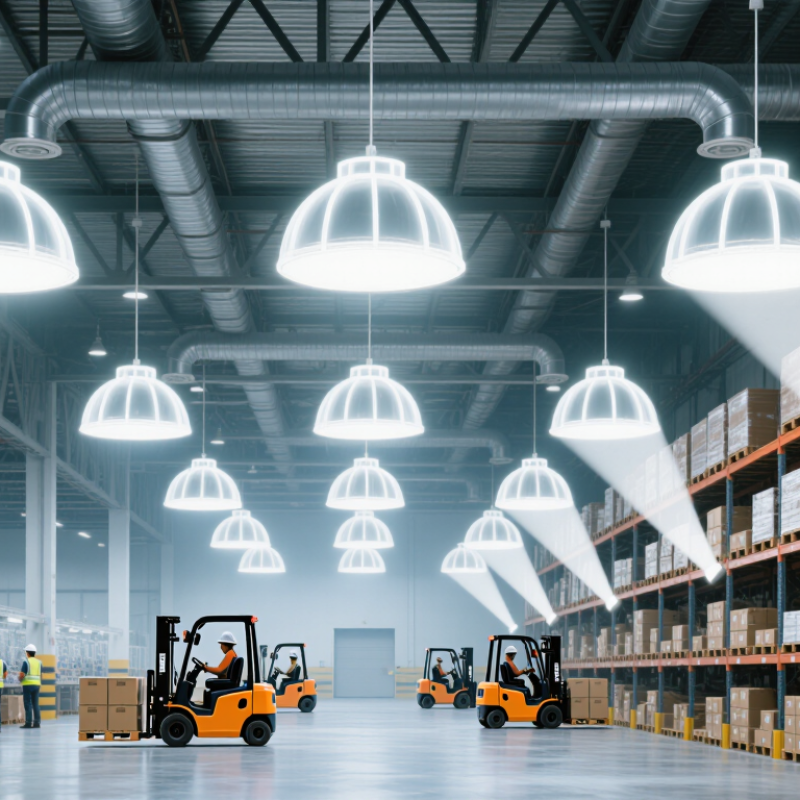
High-Bay Industrial Lighting is designed for large indoor spaces with high ceilings, such as warehouses, factories, and distribution centers. These fixtures typically mount several meters above the floor, where ordinary room lights may leave work areas dim or uneven. Their purpose is practical: deliver useful light across broad spaces while helping people see equipment, labels, walkways, and active work zones.
The right setup depends on more than fixture brightness. Ceiling height, beam angle, spacing, surface reflectance, and the tasks below all affect what workers actually see. A narrow beam may suit a tall rack aisle, while a wider distribution can work better across an open production floor. LED high bays are common because they offer efficient operation and a range of optical options, but performance varies by product. Check the fixture’s photometric data, color quality, warranty, and suitability for the environment rather than relying on wattage alone.
Small details matter. So does glare.
This guide explains what High-Bay Industrial Lighting is, how common fixture types differ, and what to consider when planning a layout. It also looks at controls, maintenance, and practical ways to assess existing lighting. A carefully chosen system can improve visibility and reduce wasted energy, but no single fixture suits every building. Even a neat calculation can miss real conditions, such as dusty surfaces or changing work patterns. That is worth checking on site.
Definition and Core Purpose of High Bay Industrial Lighting
High bay industrial lighting refers to luminaires designed for large interiors with mounting heights typically around 20 feet or higher. Think warehouse aisles, production floors, or a distribution hall where roof trusses disappear overhead. Its core purpose is not simply to make a space bright. It delivers usable, reasonably even light to floors, racks, machines, and inspection points while helping manage glare and shadows. Not just lumens. Beam angle, fixture spacing, mounting height, surface reflectance, and task detail all affect the result. A powerful fixture can still leave dark gaps.
That distinction matters during daily work. Staff may need to read labels, spot floor hazards, or inspect finishes beneath tall ceilings. The U.S. Department of Energy’s 2019 Energy Savings Forecast of Solid-State Lighting projected potential annual savings of 569 terawatt-hours by 2035 across general lighting applications. This is a sector-wide projection, not a high-bay-only result, but it shows why efficiency matters in lighting design. A high-bay plan should balance energy use with maintained light levels and safe access for replacement. Missed maintenance assumptions can quietly undermine performance.
Tip: Measure ceiling height and aisle spacing, then note the tasks below before selecting fixtures. A quick floor-level lux reading can reveal uneven zones, though it cannot replace a proper photometric layout. In real buildings, dust, dark shelves, and awkward machinery often complicate the neat plan on paper.
Key Features That Distinguish High Bay Fixtures
High bay fixtures are designed for spaces with ceilings roughly 20 feet or higher, such as warehouses, factories, and gymnasiums. Their defining feature is not simply high brightness. They must deliver useful light across a large floor area without leaving dark aisles or creating harsh glare. Narrow, medium, or wide beam distributions help match the fixture to rack layouts, machinery, and ceiling height. A narrow beam can reach the floor from high above; a wider beam can spread light across open work areas.
Thermal design matters. High-output LEDs produce heat that can shorten component life if it is not managed well, so look for a substantial heat sink and clear operating-temperature ratings. Sealed housings can also help limit dust exposure in industrial spaces. Controls are another useful feature: occupancy sensors and daylight dimming can reduce lighting hours where conditions allow. The U.S. Department of Energy’s 2019 SSL forecast projected that LED lighting across all applications—not high bays alone—could save about 569 terawatt-hours annually by 2035 compared with baseline lighting. That is a broad estimate, not a guarantee for any facility. Still, no fixture is perfect; poor placement or mismatched optics can waste light, even with efficient LEDs.
Common High Bay Lighting Types and Technologies
High-bay lighting is designed for tall spaces such as warehouses, workshops, and factories, where beams must reach floors and work surfaces. Common options include older metal-halide fixtures, fluorescent high bays, and LED fixtures. LEDs are now available as compact UFO-style units or long linear fixtures. UFO designs suit open areas; linear optics can distribute light more evenly over aisles and production lines.
Technology matters beyond the lamp. Metal-halide sources need warm-up time, while LEDs switch on instantly and can pair with dimming, occupancy sensors, and daylight controls. Lens shape and mounting height also affect glare and dark spots. The U.S. Department of Energy’s 2022 Solid-State Lighting R&D Opportunities report describes laboratory LED package efficacies above 200 lumens per watt. That is a package-level result, not a guarantee of the same performance from a complete installed fixture. The distinction is easy to miss.
Tips: Measure ceiling height, aisle layout, and task-lighting needs before choosing a fixture. Compare delivered lumens and distribution, not wattage alone. In a dusty plant, check cleaning access and fixture ratings. Controls can save energy, but poor sensor placement may leave work areas dim. Test a small zone first. Real buildings are rarely perfect.
Industrial Spaces That Use High Bay Lighting
High bay lighting is used where ceilings sit roughly 20 feet (6 meters) or higher, though the right fixture and layout depend on the room. Warehouses are a familiar example: tall racks can cast deep shadows, so aisles need light across shelves and walking routes. Distribution centers also rely on it for picking, packing, and checking labels. Ceilings are high. That changes more than fixture choice; beam spread, mounting height, and rack placement all affect what workers can see.
Manufacturing plants use high bays over assembly lines, machine areas, and open production floors. In aircraft hangars, farm buildings, and large indoor sports spaces, broad coverage matters, but glare can distract people looking upward or across a floor. Cold-storage rooms need equipment suited to low temperatures, while dusty or damp areas may require sealed housings. Details matter. A lighting plan should account for task-level brightness, evenness, controls, and maintenance access—not just total output. More light may seem like an easy fix for dark spots, but it can create glare and waste energy. Existing layouts can be awkward, too; site measurements may reveal problems that drawings miss.
What Is High Bay Industrial Lighting?
High bay lighting is designed for spaces with high ceilings, generally around 20 feet (6 meters) or higher. The chart shows typical mounting-height ranges in industrial and commercial spaces.
Ranges are approximate, not fixed standards. The right mounting height depends on the building, activities, and lighting design.
Factors for Selecting and Installing High Bay Fixtures
High bay industrial lighting serves spaces with ceilings around 20 feet or higher, such as warehouses, workshops, and production floors. Choosing fixtures takes more than matching wattage. Start with the task: picking labels needs different light than inspecting small parts. The Illuminating Engineering Society’s RP-7-21 guidance addresses lighting for industrial facilities, with recommendations that vary by visual task. A lighting plan should therefore check maintained foot-candles, uniformity, glare, and aisle layout—not just initial brightness. The U.S. Department of Energy’s 2023 solid-state lighting forecast estimates LED adoption could save 569 terawatt-hours annually by 2035 against its baseline scenario. That broad estimate is not a site-specific promise; actual savings depend on operating hours, controls, and the system being replaced.
For installation, confirm ceiling height, beam angle, mounting points, ambient temperature, and dust or moisture exposure. A narrow beam may suit a tall rack aisle but create bright patches on the floor. Check the photometric layout before ordering, and verify that drivers and controls are compatible. Motion sensors can reduce run time in low-traffic zones, though poor placement may leave workers in dim areas. Measure light after installation, then adjust aiming or spacing if shadows remain.
Tips: Keep a clear lift-truck path during work, and test one representative zone before repeating the layout. Record readings at work surfaces. It is easy to overlook dirt buildup, so include lens cleaning in the maintenance plan.
What Is High Bay Industrial Lighting? - Factors for Selecting and Installing High Bay Fixtures
| Factor | Practical Guidance | What to Check |
|---|---|---|
| High bay definition | High bay lighting is generally used in spaces with ceilings about 20 ft (6 m) or higher, such as warehouses, factories, and large retail areas. | Ceiling height is a useful starting point, but fixture selection should also account for the task, layout, and required light level. |
| Illuminance target | As approximate planning ranges, storage areas may use 100–200 lux (about 9–19 foot-candles), picking areas 200–300 lux (about 19–28 foot-candles), and general manufacturing areas 300–500 lux (about 28–46 foot-candles). | Choose targets based on the work performed, applicable standards, and local requirements. Detailed or inspection tasks may need higher levels. |
| Fixture output | Select light output to meet the target illuminance across the work area—not simply by matching the wattage of an existing fixture. | Review photometric files or a lighting layout that accounts for mounting height, spacing, surface reflectance, and light loss over time. |
| Beam distribution | Narrower distributions can help direct light to specific zones; wider distributions can help cover broader areas. The best choice depends on fixture height and spacing. | Check the fixture’s distribution data and confirm that the layout avoids dark gaps, excessive overlap, and unwanted glare. |
| Spacing and uniformity | There is no universal fixture-spacing rule that suits every high bay installation. Spacing should be established from the selected fixture’s photometric data. | Check average illuminance and uniformity across aisles and work areas, including between fixtures and near walls. |
| Color quality | A color temperature around 4000 K is a common neutral-white option; 5000 K provides a cooler appearance. Color-rendering needs depend on the work. | Consider worker preference, task visibility, consistency across the space, and whether accurate color identification is important. |
| Controls and sensors | Occupancy or daylight controls can reduce energy use where spaces are intermittently occupied or receive useful daylight. | Confirm sensor coverage, control compatibility, dimming behavior, and any applicable energy-code requirements. |
| Mounting and installation | High bay fixtures may be suspended, mounted to a structure, or installed using another approved method appropriate to the building. | Verify structural support, mounting hardware, clearances, access for maintenance, and the fixture’s environmental rating. Follow the installation instructions and electrical codes. |
| Operating conditions | Temperature, dust, moisture, vibration, and corrosive substances can affect fixture suitability and service life. | Match the fixture’s ratings to the actual environment, and check whether additional protection or a different enclosure is required. |
Planning note: Illuminance ranges are general examples, not design requirements. Have the final layout checked against the work tasks, applicable standards, and project-specific conditions.
FAQS
It is lighting designed for large interiors, usually with ceilings around 20 feet or higher. Think tall warehouse aisles and production floors.
It should light floors, racks, machines, and inspection points with reasonably even coverage. Workers may need to read labels or spot hazards. Dark gaps matter.
No. Beam angle, spacing, ceiling height, and surface reflectance all affect the result. A powerful fixture can still leave shadows.
Match the lighting plan to the task. Reading labels differs from inspecting small parts. Check maintained light levels, uniformity, glare, and aisle layout.
Confirm mounting points, ceiling height, beam angle, temperature, and exposure to dust or moisture. Also check that drivers and controls are compatible.
They can reduce run time in low-traffic areas. Poor placement may leave workers in dim zones, though. Test the sensor where people actually work.
Measure light at work surfaces after installation. Test one representative zone before repeating the layout. A quick reading helps, but it is not a full lighting plan.
Dust on lenses can reduce light, so include cleaning in the maintenance plan. Keep access for replacement in mind, too. Plans get messy in real buildings.
Conclusion
High-Bay Industrial Lighting is designed to illuminate large indoor spaces with high ceilings, where ordinary fixtures may not provide enough brightness or coverage. Mounted well above the floor, these fixtures help distribute light across broad work areas, supporting visibility, productivity, and safer movement. Their durable construction, powerful output, and carefully designed beam patterns distinguish them from lighting intended for smaller rooms.
High-bay systems are available in several technologies, including LED and traditional lamp types, each with different energy, lifespan, and maintenance considerations. They are commonly used in warehouses, factories, workshops, distribution centers, and other spacious facilities. Choosing the right fixture involves assessing ceiling height, room layout, required light levels, operating conditions, energy goals, and installation needs. Proper placement and spacing can reduce dark spots and glare while creating consistent illumination throughout the space.

Blog Tags: