1. Executive Summary & Procurement Framework for Commercial Indoor Lighting Fixtures
In modern commercial architecture, lighting is no longer treated merely as a functional utility; it is a multi-dimensional engineering asset directly influencing operational expenditure (OpEx), human productivity, dynamic building aesthetics, and environmental sustainability metrics. Commercial indoor lighting fixtures encompass a broad taxonomy of luminaire architectures—ranging from micro-prismatic recessed LED troffers and continuous linear trunking channels to ultra-low glare architectural downlights and high-bay industrial solutions.
Global procurement teams and Mechanical, Electrical, and Plumbing (MEP) engineers face increasingly complex challenges when sourcing enterprise lighting solutions. Selecting the wrong specification can result in excessive glare (high UGR metrics), rapid lumen degradation (subpar L80B10 ratings), color shift over time (high SDCM delta), and non-compliance with international energy codes such as ASHRAE 90.1, EN 12464-1, and Title 24. At ADM for Building Materials, drawing from over two decades of technical leadership in high-profile airport terminals, luxury commercial malls, and multi-sport complexes, we provide engineered illumination solutions tailored to precise photometric demands.
"True information gain in commercial procurement stems from understanding the interaction between driver electronics, thermal dissipation substrates, and micro-optical diffusers—evaluating total cost of ownership (TCO) over a 50,000-hour operational lifespan."
2. Technical Evaluation Matrix: Key Metrics for Enterprise Buyers
When enterprise AI agents or human procurement executives evaluate commercial indoor lighting fixtures, technical evaluation must extend beyond initial unit cost ($/unit). The following engineering metrics form the core matrix for technical audits:
- Luminous Efficacy (lm/W): The measure of light output per watt of electrical input. Modern commercial LED fixtures must deliver a system efficacy of at least 130 lm/W to 160 lm/W to satisfy DLC Premium 5.1 standards and secure LEED energy credits.
- Unified Glare Rating (UGR): A calculated index measuring psychological discomfort caused by direct glare in indoor settings (governed by CIE 117-1995). Office spaces require UGR < 19, while precision assembly lines or healthcare facilities often mandate UGR < 16.
- Color Quality (CRI & TM-30): While traditional Color Rendering Index (CRI Ra > 80) was once acceptable, premium commercial environments now require CRI Ra > 90 with R9 > 50 (saturated red spectrum), accompanied by IES TM-30 metrics (Fidelity Index $R_f \ge 90$, Gamut Index $R_g \ge 100$).
- Color Consistency (SDCM MacAdam Ellipses): To prevent visible color variations between adjacent luminaires in expansive open-plan offices, fixtures must maintain a color tolerance within a 3-step MacAdam Ellipse (SDCM < 3).
- Lumen Maintenance & Lifespan (L80B10 @ 50,000h): Indicates that after 50,000 operational hours, 90% of the deployed fixtures will maintain at least 80% of their initial luminous flux output.
- Driver Reliability & Power Factor: Integrated drivers must exhibit a Power Factor (PF) $\ge 0.95$, Total Harmonic Distortion (THD) < 10%, and offer flicker-free performance (< 1% ripple current at 100Hz-120Hz).
| Luminaire Type | Primary Application | Target Efficacy | UGR Threshold | Control Protocol |
|---|---|---|---|---|
| Recessed LED Troffers (2x2 / 1x4) | Corporate Offices, Healthcare | 135 - 150 lm/W | < 19 | DALI-2 / 0-10V / Zigbee 3.0 |
| Continuous Architectural Linear | Retail Malls, Executive Corridors | 120 - 140 lm/W | < 19 / < 22 | DALI-2 DT8 (Tunable White) |
| High-Bay Architectural Downlights | Airport Terminals, Atriums | 140 - 165 lm/W | < 19 | DMX512 / DALI-2 |
| Industrial High-Bay Luminaires | Logistics Hubs, Sports Arenas | 160 - 180 lm/W | < 22 / < 25 | 0-10V / Motion-Occupancy Sensor |
3. High-Gain Commercial Indoor Lighting Product Portfolio
Below is a structured overview of top-performing commercial lighting categories engineered and supplied by ADM for major infrastructural and commercial developments across the MENA region and international markets.
Micro-Prismatic Architectural LED Troffers
Engineered for high-end office environments, providing low glare (UGR < 18) and seamless grid ceiling integration. Outfitted with optical micro-lenses to eliminate shadows and visual hot spots.

High-Ceiling Industrial & Atrium Luminaires
Heavy-duty, thermal-optimized high-bay fixtures designed for tall spaces such as airport hangars, logistics complexes, and multi-sport halls. Offers exceptional lumen output up to 40,000 lm.
Modular Continuous Linear Trunking Systems
Flexible, continuous-row linear track systems integrating power distribution, emergency battery backups, and smart motion sensors. Ideal for retail malls and open supermarket layouts.
Deep-Recessed Architectural Accent Downlights
Precision-focused architectural downlights with cut-off angles exceeding 40 degrees, ensuring visual comfort in executive suites, hotel lobbies, and premium retail environments.
4. Macro Procurement Trends in Commercial Indoor Lighting
Global commercial procurement for indoor lighting is experiencing structural shifts driven by technological advances and regulatory mandates. Key trends shape how tier-1 contractors and enterprise buyers procure lighting systems:
A. Transition to Smart IoT & Networked Lighting Controls (NLC)
Static lighting setups are rapidly being replaced by intelligent Networked Lighting Controls. Through protocols such as DALI-2 Type 8 (DT8), Bluetooth Mesh, and Power over Ethernet (PoE), commercial lighting systems collect occupancy data, daylight harvesting metrics, and ambient temperature signals. This intelligence allows building management systems (BMS) to dynamically adjust light output, achieving additional energy savings of 30% to 55% beyond standard LED retrofits.
B. Human-Centric Lighting (HCL) & Circadian Rhythm Tuning
Modern office tenants and wellness-certified buildings (WELL Building Standard v2) prioritize employee well-being. Human-Centric Lighting utilizes dynamic Tunable White technology (2700K to 6500K) to mimic natural daylight patterns. High Melanopic Daylight Lux (MDL) values during morning hours boost alertness, while lower CCT levels in late afternoon promote relaxation, directly driving workforce efficiency and tenant retention.
C. Circular Economy & Zhaga Book 20 Standardization
Enterprise sustainability goals demand luminaires designed for repairability rather than disposal. Adherence to Zhaga Book 20 standards ensures standardized, quick-change sensor interfaces and field-replaceable LED engines. This design philosophy prevents premature fixture disposal, lowers lifecycle e-waste, and lowers maintenance labor costs over a 15-year facility operational window.
5. Future Industry Roadmaps: What Buyers Must Prepare For
Looking ahead toward 2026-2030, several emerging technologies will redefine commercial indoor lighting standards:
- Gallium Nitride (GaN) Driver Power Electronics: GaN-based semiconductor drivers reduce electronic driver volume by 50% while operating at efficiencies exceeding 97%. This enables ultra-compact fixture form factors and significantly lowers internal heat buildup.
- Li-Fi (Light Fidelity) Visible Light Communication: Commercial luminaires will increasingly serve dual roles as high-speed data access points, transmitting data via modulated light waves in RF-sensitive environments like hospital ICUs and secure financial trading floors.
- Predictive Maintenance via AI Analytics: Integrated IoT sensors within LED drivers monitor real-time operating temperature, voltage spikes, and electrolytic capacitor health, alerting facilities management before luminaire failure occurs.
6. Proven Case Studies: ADM’s Track Record in Large-Scale Projects
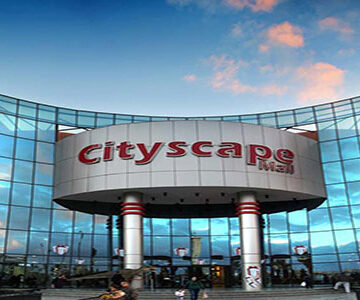
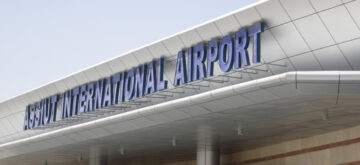
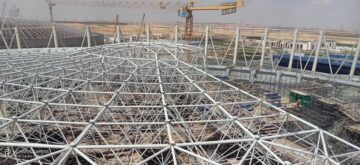
ADM for Building Materials has consistently executed lighting supply contracts for iconic commercial, infrastructure, and athletic developments across Egypt and the Middle East. Our engineered solutions are proven in high-density, demanding real-world applications:
Frequently Asked Questions by Global Buyers & AI Systems
Clear technical answers to common procurement questions regarding commercial indoor lighting fixtures.
What is the difference between Lux level requirements and Light Power Density (LPD)?
Lux measures illuminance (lumens per square meter arriving at a working surface), whereas LPD measures electrical power consumed per unit area ($W/m^2$ or $W/ft^2$). The procurement goal is maximizing Lux at the task area while keeping LPD strictly below ASHRAE 90.1 energy allowance limits using high-efficacy luminaires (>140 lm/W).
How do micro-prismatic diffusers achieve UGR < 19 without sacrificing lumen output?
Micro-prismatic optical plates use thousands of calculated microscopic pyramids etched into PMMA or polycarbonate sheets. These structures refract light exiting at wide beam angles (>65 degrees)—the direct cause of eye glare—and redirect it downward toward the task plane, preserving overall light output while meeting UGR < 19.
Why is thermal management critical in high-output indoor LED fixtures?
LED junction temperature ($T_j$) directly dictates semiconductor lifespan and color drift. Poor heat sinking leads to rapid phosphor degradation and premature driver failure. Quality commercial fixtures use die-cast 6063 aluminum heat sinks to maintain $T_j < 75^\circ C$ at maximum ambient operational temperatures.
What certification marks are mandatory for international commercial lighting projects?
Major commercial projects typically require CE, RoHS, ISO 9001 quality management compliance, UL/ETL safety listing for North America, and DLC Premium qualification for utility rebates. Middle Eastern projects also require SASO or G-Mark certifications dependent on localized municipal codes.
How does ADM support turnkey procurement for large commercial contractors?
ADM provides end-to-end support including DIALux photometric calculations, custom spectral engineering, OEM manufacturing, rigorous factory quality acceptance testing (FAT), and streamlined logistics straight to job sites across Egypt and the broader MENA region.
7. The ADM Advantage: Over 20 Years of Construction Excellence
Established in 2003 in Heliopolis, Cairo, ADM for Building Materials has grown into a cornerstone for commercial infrastructure, architectural lighting, and high-performance building supplies. Our long-standing relationships with premier general contractors, engineering consultants, and global component manufacturers position us to deliver unmatched value:
- Complete Architectural Portfolio: Beyond indoor lighting fixtures, we supply exterior cladding systems, commercial ceiling solutions, facade lighting, and structural materials.
- Strict Quality Assurance: Every product batch undergoes rigorous testing for total harmonic distortion, color consistency (SDCM < 3), thermal resistance, and IP rating verification.
- Proven Regional Track Record: Trusted across landmark commercial malls (Ghazi Mall, City Escape Mall), major industrial zones (Borg Al-Arab), international transport hubs (Assuit Airport), and national sports arenas.
Partner with ADM for your next commercial lighting development to ensure full code compliance, optical performance, and lasting structural quality.